Too Simple to Sell, Too Powerful to Ignore: The Book Every Publisher Turned Down That Rewired American Self-Help
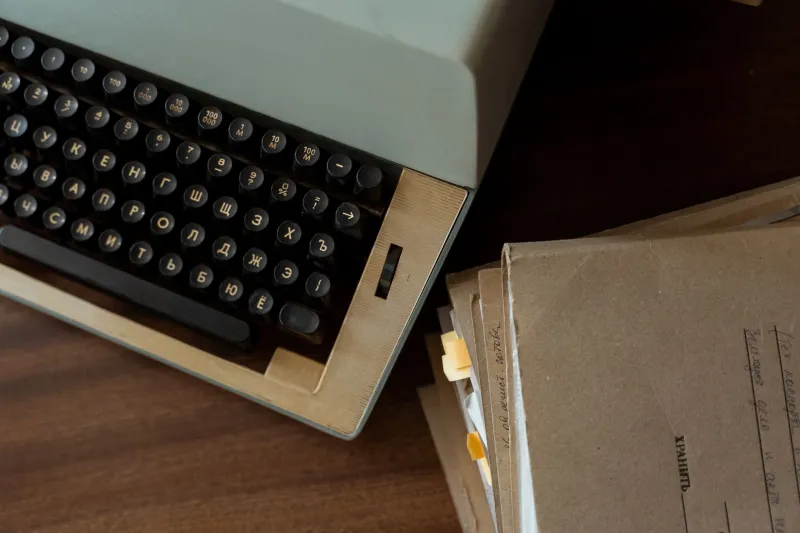
The Stack of Rejection Letters Nobody Talks About
Before the speaking tours. Before the talk show appearances. Before the millions of copies stacked in airport bookstores and waiting rooms from Maine to California — there was a manuscript that nobody wanted.
It came back with notes like too simplistic, not academic enough, limited commercial appeal. One editor reportedly said the concepts were things readers could figure out on their own. Another called the premise "soft." The author collected rejection after rejection the way some people collect stamps — except there was nothing pleasant about the hobby.
What those editors missed, almost uniformly, was the point entirely.
A Therapist Who Actually Listened
The author had spent years in clinical practice before sitting down to write. She wasn't working with Fortune 500 executives or writing prescriptions for the well-heeled. She was in the room with ordinary people — people who felt stuck, ashamed, exhausted by the gap between who they were and who they thought they were supposed to be. And she noticed something the publishing industry hadn't yet figured out: those people didn't want dense theory. They wanted someone to name what they were feeling and show them a door.
The manuscript she eventually produced was, by the standards of academic psychology, deliberately stripped down. No jargon. No footnotes designed to intimidate. Just clear, direct language that treated readers like adults capable of changing their own lives — if someone would only hand them the tools in a language they could actually understand.
That plainness was, apparently, a dealbreaker.
The Unconventional Play
After the thirtieth-odd rejection — accounts vary, but the number sits somewhere in that range — most people would have filed the manuscript in a drawer and moved on. She didn't. What she did instead was something that sounds obvious in retrospect and was borderline radical at the time: she went around the gatekeepers entirely.
She began distributing the book directly through the networks she already had — therapists, counselors, church groups, community organizations. Places where people were already in the business of helping other people feel less alone. The book didn't need a splashy launch or a review in the New York Times. It needed to be in the right hands, and she knew whose hands those were.
Word spread the way word always spreads when something actually works: quietly, personally, from one person to another who says you need to read this.
When the Industry Came Back Around
By the time mainstream publishers took notice, the book had already built something no marketing budget could manufacture — a genuine, grassroots reputation. It had moved from therapists' offices to kitchen tables to college campuses. People weren't just reading it; they were underlining passages and mailing copies to their siblings.
The publishers who'd passed on it had to sit with that particular flavor of regret. Because the book didn't just sell well. It became the kind of cultural artifact that gets referenced in other books, cited in academic papers, and name-dropped in therapy sessions for generations. The "too simple" ideas turned out to be the ideas that stuck.
What Simple Actually Means
There's a version of this story that's just about commercial vindication — the underdog proves the suits wrong, the numbers roll in, everyone learns a lesson. But that's not really what makes it worth telling.
What makes it worth telling is what the book actually did. It gave millions of Americans — people who'd never set foot in a therapist's office and never planned to — a vocabulary for their inner lives. It reframed concepts that had lived behind clinical walls and brought them into everyday conversation. Suddenly, ordinary people were talking about patterns, about the stories they told themselves, about the difference between reacting and choosing.
That's not a small thing. That's a shift in how a culture understands itself.
The Lesson the Rejection Letters Left Behind
The editors who passed weren't stupid. They were operating on a logic that made sense within the publishing industry as it existed — a logic that favored credentials, complexity, and the kind of authority that comes with institutional backing. What they couldn't see was that the authority this author had was different. It came from the room. From thousands of hours of sitting across from people in real pain and figuring out what actually helped.
The marketplace, eventually, knew the difference.
There's something almost poetic about it: a book about trusting yourself, written by someone who had every reason to stop trusting herself and didn't. The rejection letters became part of the story. The persistence became part of the proof.
Because if the ideas in the book were worth anything — and it turned out they were worth quite a lot — then the author had to live them first. Had to look at a stack of nos and decide that the people who said no didn't get to be the final word.
They weren't.
What Gets Left on the Cutting Room Floor of History
We love the success part of success stories. The bestseller lists, the cultural impact, the moment of vindication. What we talk about less is the gap — the years between the idea and the recognition, when the person with the idea has to keep going on nothing but their own conviction.
For this author, that gap was measured in rejection letters and quiet distributions through networks the publishing world didn't bother to watch. It was measured in the faith that simplicity wasn't a flaw — it was the whole point.
The book that nobody wanted became, in the end, exactly what millions of people needed. And the editors who called it unmarketable became a footnote in a story that turned out to be much bigger than any of them imagined.
Sometimes the gatekeepers are wrong. Sometimes the door you need isn't the one they're guarding.