
Photo: Unknown (commercial matchbox manufacturer), Public domain, via Wikimedia Commons
Let's start with what we know about Cassandra: she was given the gift of prophecy and the curse of never being believed. It's a myth, of course, but it maps onto real history with uncomfortable frequency. The people who see disasters coming clearly enough to describe them in detail are rarely celebrated in advance. More often, they're marginalized, ridiculed, or — in some cases — removed entirely from the conversation.
This is a story about one of those cases.
A Woman in a Room Full of Men Who Knew Better
In the years immediately following World War I, the American economy was doing something that felt wonderful and was, in fact, extremely dangerous. Credit was expanding at a pace the country had never seen. Banks were lending freely. Consumers were buying on installment plans. Speculators were borrowing to invest in a stock market that seemed to have permanently escaped the laws of gravity.
Most economists of the era either celebrated this expansion or looked away from its implications. A handful of dissenters existed, but they were scattered and their warnings were easy to dismiss as the usual pessimism of people temperamentally unsuited to prosperity.
Among those dissenters was a woman who had come to economics through an unusual path — not through the elite university pipeline that defined the profession, but through a combination of self-directed study, correspondence with established academics, and a relentless focus on the data that others were choosing not to look at too carefully. She wrote extensively about what she called the structural instability of credit-driven growth. She argued, in paper after paper, that the expansion of speculative lending wasn't a sign of economic health but a warning sign of coming collapse — that the same mechanism creating apparent wealth was building a pressure that would eventually release catastrophically.
She named the year. She named the mechanism. She was wrong only about the precise timing, by a matter of months.
The Response She Received
The professional response to her work was not engagement. It was erasure.
Her papers were rejected by journals whose editors found her conclusions alarmist and, in several documented cases, her gender a convenient reason to dismiss her credibility before engaging with her arguments. When she sought academic positions, she was told, in various formulations, that economics departments weren't in the business of hiring women for serious research roles. When she sought audiences with policymakers, she was either ignored or condescended to.
What happened next is the part of the story that's hardest to read without anger.
As her warnings became more urgent through the mid-1920s — as she watched the speculative bubble she had predicted inflate beyond anything she had originally modeled — her behavior became more erratic. She wrote letters to government officials that were, by the accounts of those who received them, alarming in their intensity. She showed up uninvited to financial institutions. She became, in the language of the era, "difficult."
In 1926, she was committed to a psychiatric institution by family members acting, they believed, in her best interest. The specific diagnosis applied to her would today be recognized as a description of a woman under extreme stress who was not being heard and had no conventional outlet for her frustration. At the time, it was enough to remove her from public life entirely.
Three years later, the stock market crashed. The credit bubble she had spent a decade describing in precise detail collapsed in almost exactly the sequence she had predicted.
The Ideas That Survived
Here is the remarkable thing about good ideas: they're very hard to kill, even when you successfully silence the person who had them.
Her papers existed. They had been read — dismissed, but read — by enough people that they couldn't be entirely expunged. In the decades following the Depression, as economists struggled to build theoretical frameworks that could explain what had happened and prevent it from happening again, researchers kept encountering her work.
The analysis of credit cycles she had developed — the relationship between speculative lending, asset price inflation, and systemic fragility — was rediscovered repeatedly by economists working independently. Hyman Minsky, whose "financial instability hypothesis" became one of the most cited frameworks in post-2008 economic theory, was working in territory she had mapped decades earlier. The language was different. The mathematical formalization was more sophisticated. But the core insight — that stability breeds instability, that periods of apparent financial health create the conditions for catastrophic collapse — was hers.
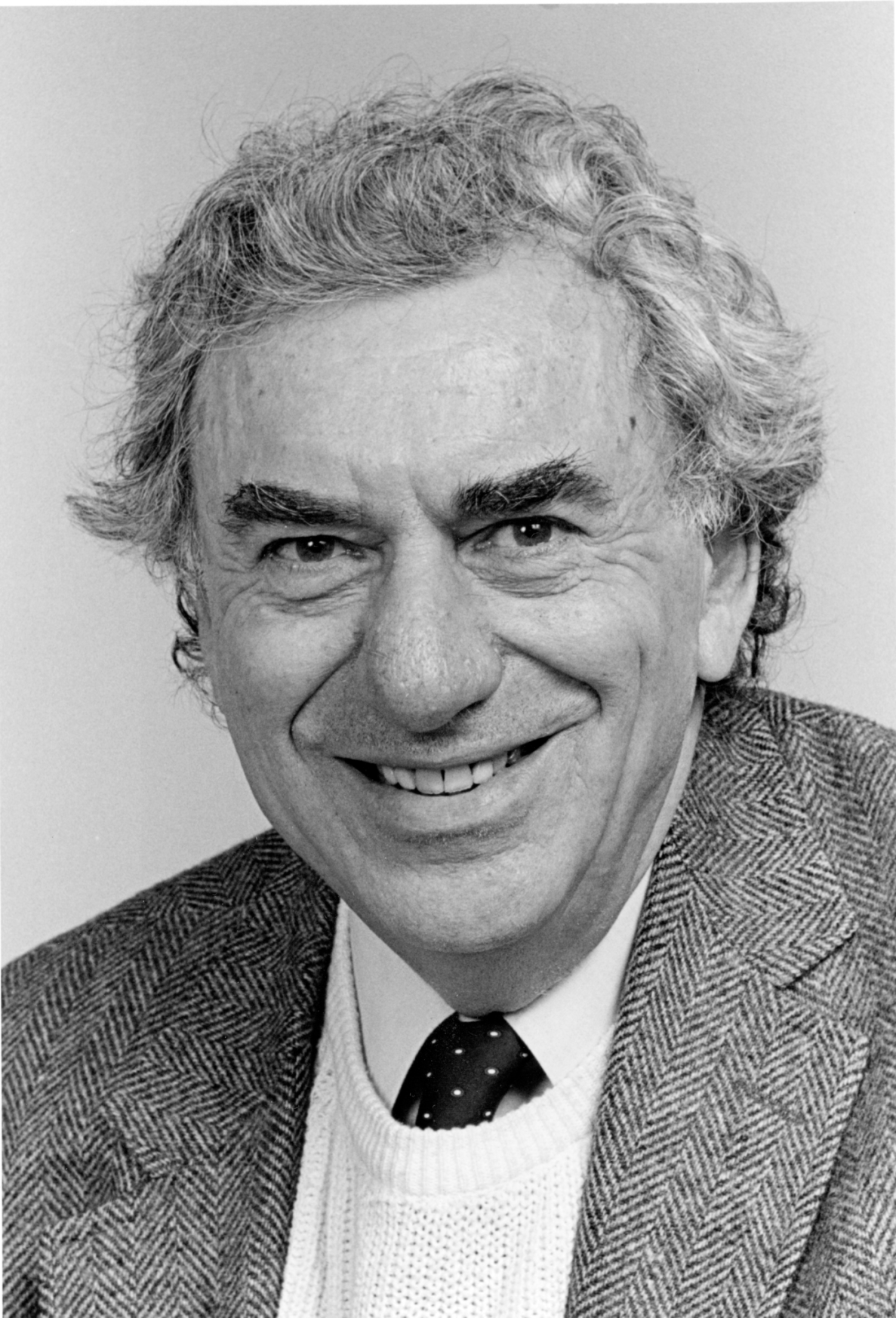 Photo: Hyman Minsky, via www.oexplorador.com.br
She never received credit for it in her lifetime. She died in the institution, years after the crash she had predicted, largely unknown.
What Gets Lost When We Don't Listen
There's a version of this story that focuses on the injustice of what was done to her, and that version is entirely valid. What happened to her was wrong in ways that compound on each other — the professional exclusion, the dismissal of her work, the institutionalization of a woman whose primary offense was being correct and persistent about it.
But there's another version of this story that focuses on the cost to everyone else.
The Great Depression didn't have to be as severe as it was. The mechanisms that made it catastrophic — the overextended credit, the speculative excess, the systemic fragility of the banking system — were not invisible. They were visible to anyone who looked carefully at the data without the distorting lens of self-interest or institutional optimism. She had looked. She had seen. She had tried, with increasing desperation, to make others see too.
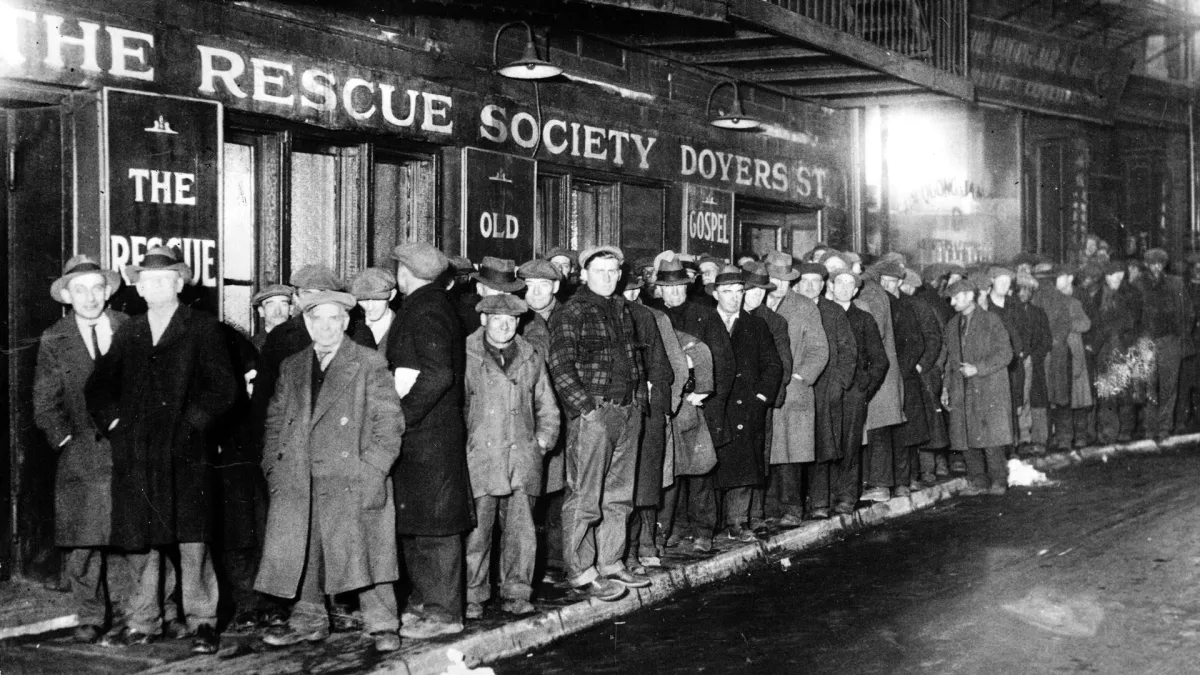 Photo: Great Depression, via assets.editorial.aetnd.com
The people who dismissed her weren't stupid. Many of them were among the most credentialed economists of their generation. What they lacked was the willingness to take seriously an analysis that came from outside the accepted circles of authority — from a woman without institutional affiliation, without the right credentials, without the right gender.
That unwillingness cost millions of Americans their savings, their homes, their livelihoods.
The Lesson That Keeps Getting Relearned
Every generation of financial crisis comes with its version of this story. The analysts who saw the 2008 housing collapse coming were dismissed as cranks for years before the collapse proved them right. The economists who warned about dot-com overvaluation were laughed off CNBC before the Nasdaq lost 78% of its value.
The pattern is consistent enough that it should probably be taught as a formal subject: the people most likely to correctly identify systemic risk are often the people with the least institutional investment in pretending the risk doesn't exist. And the people with the least institutional investment are, almost by definition, the people with the least institutional power.
She had the analysis right. She had the timing roughly right. She had none of the power required to make anyone act on what she knew.
Her ideas survived anyway. They always do.
The question — the one that should keep financial regulators up at night, the one that should give every institution pause — is who we're not listening to right now, and what they're trying to tell us.