She Heard Voices in the Air. They Locked Her Away. The Voices Were Real.
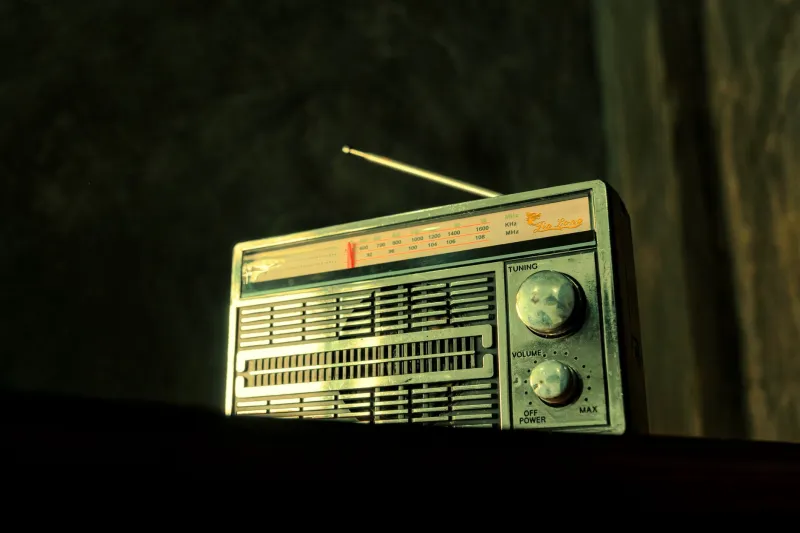
A Woman Who Heard What Nobody Else Could
The year was somewhere between 1906 and 1910 — the records are imprecise in the way that records about women's mental health from that era tend to be imprecise — and Lulu Nettleton was trying to explain something that she didn't have the vocabulary to explain.
She heard voices.
Not the kind of voices that whispered instructions or told her to do things. Not hallucinations with faces or personalities. What Lulu described, according to fragmented hospital intake notes and a handful of letters preserved in a family archive, was more like overhearing a conversation from another room — fragments of speech, occasional music, sounds that seemed to come from the air itself rather than from any identifiable source.
Her husband was alarmed. Her doctor was confident. The diagnosis, rendered with the casual certainty that early-twentieth-century psychiatry reserved for women who reported unusual experiences, was some variation of hysterical disorder or early psychosis. She was committed to a Michigan state institution, where she remained for a period that the available records suggest was somewhere between two and four years.
The voices, everyone agreed, were not real.
Except they were.
What the Air Actually Contained
To understand what Lulu Nettleton may have been experiencing, you have to understand what the electromagnetic environment of the early 1900s actually looked like — or rather, what it sounded like, if you happened to be sensitive to it in ways that science hadn't yet explained.
Guglielmo Marconi had demonstrated wireless telegraphy across the Atlantic in 1901. By the middle of that decade, experimental radio transmissions were multiplying across the United States, concentrated in coastal cities but spreading inland. The University of Michigan, located in Ann Arbor, was among the institutions conducting early wireless experiments. Amateur operators — the hobbyists and engineers who were laying the groundwork for what would become commercial broadcasting — were transmitting signals in increasing numbers.
 Photo: University of Michigan, via i.pinimg.com
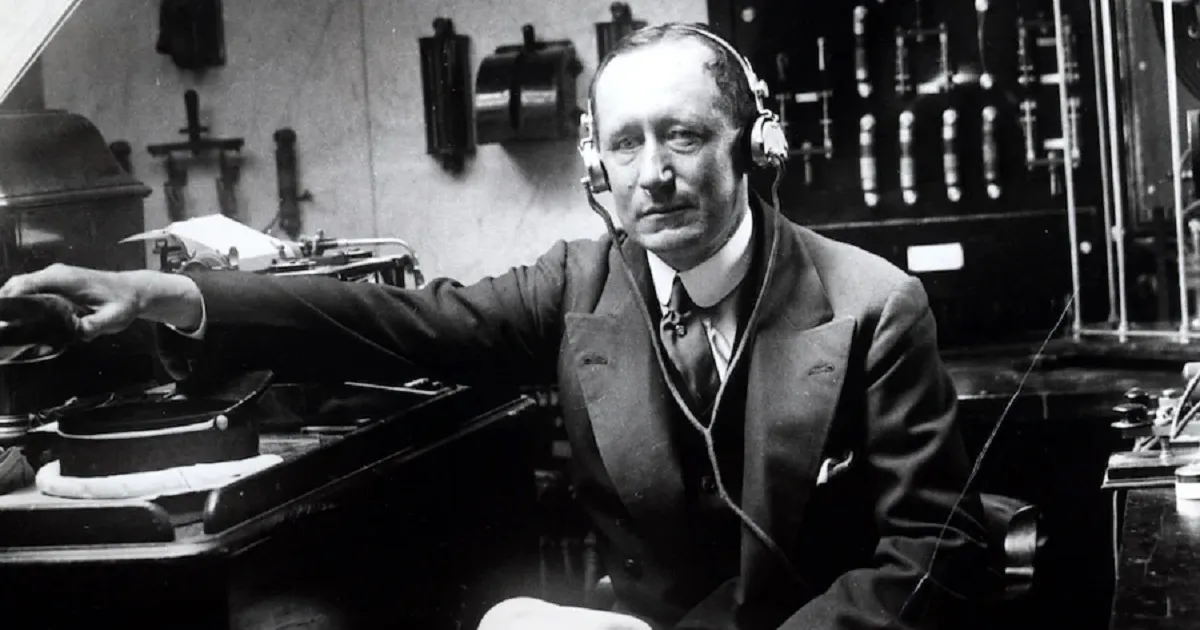 Photo: Guglielmo Marconi, via www.fm-world.it
Those signals were invisible. They were inaudible to most people. But the physics of early radio transmission, combined with the metalwork in older houses, certain types of dental fillings, and even some configurations of household objects, could under specific conditions produce faint, distorted auditory effects that were genuinely difficult to trace to a source.
There is a documented phenomenon — reported by multiple people in the early twentieth century and taken seriously by a handful of engineers — of individuals who claimed to hear radio transmissions without equipment. Some of these reports were almost certainly fabricated or misunderstood. But some were investigated and found to have plausible physical explanations: rectifying junctions formed by corroded metal contacts, acting as primitive crystal detectors, converting radio frequency signals into faint audio.
In other words: under the right conditions, in the right house, near the right equipment, a person could hear radio waves. Not metaphorically. Literally.
The Particular Cruelty of Being Ahead of the World
What makes Lulu Nettleton's story devastating rather than simply sad is the timing.
She was not describing something impossible. She was describing something real that the medical establishment of her era had no framework to evaluate. The doctors who committed her weren't monsters — they were men working within the limits of what their field understood, in a cultural moment when a woman reporting inexplicable sensory experiences was far more likely to be diagnosed as unstable than investigated as a data point.
But the gap between what she experienced and what the world was prepared to believe is worth sitting with.
By the time commercial radio broadcasting began in earnest in the early 1920s — KDKA in Pittsburgh launching what is widely considered the first licensed commercial broadcast in November 1920 — the phenomenon Lulu had described would have been entirely comprehensible to anyone who owned a receiving set. Within a decade, millions of Americans would be gathering around living room radios to hear exactly the kind of voices and music that had gotten her institutionalized.
She was, by the most conservative estimate, about fifteen years early.
The Archive That Almost Wasn't
Lulu Nettleton's story didn't survive because anyone thought it was important. It survived because a great-niece, conducting family genealogy research in the 1970s, found the hospital intake documents in a county archive that was about to be cleared and requested copies before they were destroyed.
Those documents, combined with two letters from Lulu's husband to his brother-in-law describing her symptoms before her commitment, and a single letter apparently written by Lulu herself from the institution, form the fragmentary record from which her story can be reconstructed.
The letter Lulu wrote is short. It doesn't argue for her sanity or rail against her confinement. It mostly asks after her children and mentions, almost in passing, that the voices have gotten quieter since she arrived at the institution.
Of course they had. She was no longer in her house, with its particular configuration of pipes and metalwork and proximity to the university's wireless experiments. She was in a different building. The reception was worse.
How Many Others Were There
Lulu Nettleton is a footnote, and she is a footnote precisely because nobody thought to look for the pattern she represents.
But the question her story raises is genuinely uncomfortable: how many people, in the late nineteenth and early twentieth centuries, were dismissed as delusional for perceiving things that were real but not yet understood? How many individuals who reported anomalous sensory experiences — sounds, signals, patterns — were institutionalized or medicated or simply disbelieved, when what they were actually experiencing was the early edge of a phenomenon that the world hadn't caught up to yet?
We can't know. The records that would answer that question were never kept with that question in mind. Psychiatric intake documents from that era recorded symptoms, not hypotheses. Nobody was asking whether the patient might be right.
What we do know is that the history of human perception is full of moments when the line between madness and early awareness was drawn by whoever happened to have institutional authority at the time. The woman who heard radio waves before radio was real. The man who smelled something wrong in the water before the contamination was detected. The child who knew something was different about the way they processed information before anyone had a name for neurodivergence.
What Her Story Means Now
Lulu Nettleton was not a scientist. She didn't understand what she was hearing, and she had no way to prove it. She was a housewife in a Midwestern college town at the turn of the century, and the thing she perceived accurately was used as evidence of her instability.
There's no triumphant ending here. She didn't get out of the institution and vindicate herself. She didn't live to hear a radio broadcast and say, that's it, that's what I was talking about. History didn't circle back to give her credit.
What she has, instead, is this: the quiet, stubborn fact that she was right. The voices were there. The air was full of signals. The world wasn't ready to believe her, and that failure of readiness cost her years of her life.
Sometimes being ahead of your time isn't a gift. Sometimes it's just what happens when the world moves too slowly for the person who's already living in it.