He Drew Upside Down So White Clients Wouldn't Have to Sit Next to Him — Then Designed Half of Hollywood
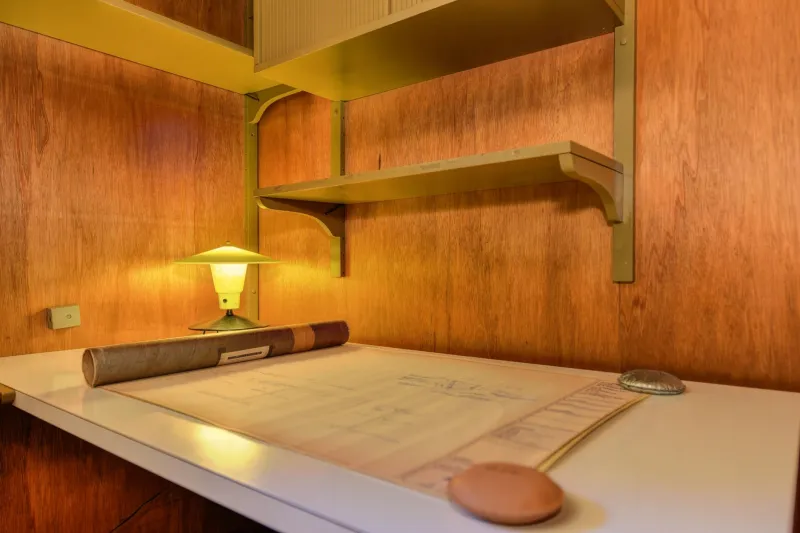
He Drew Upside Down So White Clients Wouldn't Have to Sit Next to Him — Then Designed Half of Hollywood
There's a trick Paul Revere Williams could do that no other architect in America could pull off.
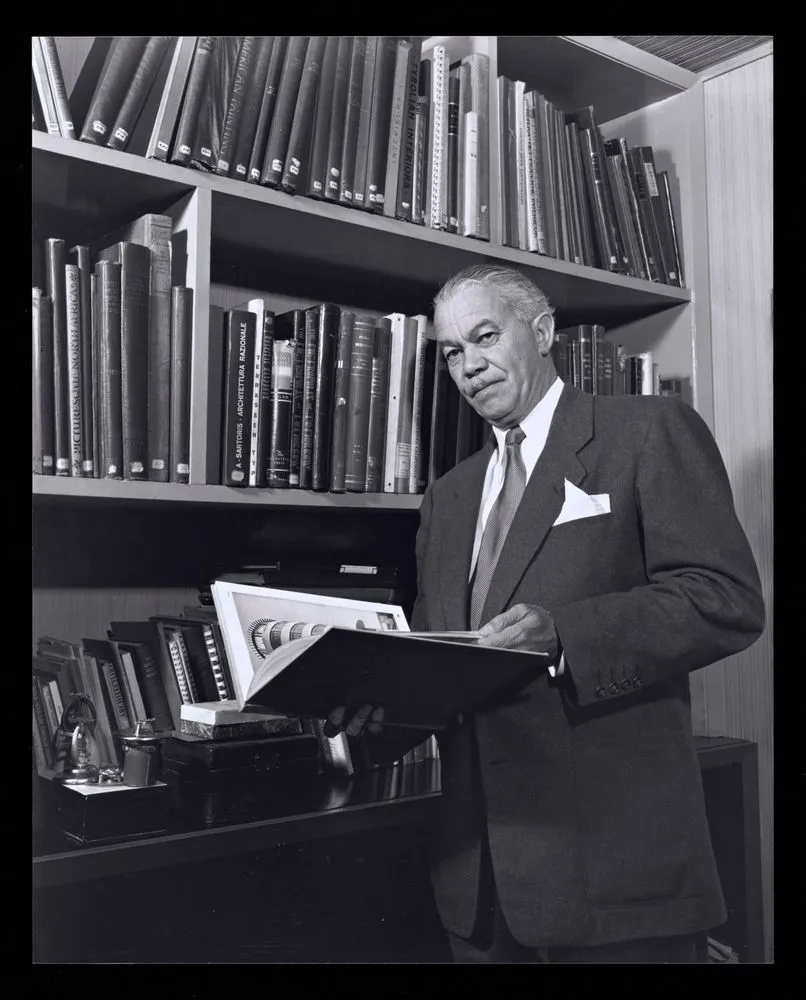 Photo: Paul Revere Williams, via snoopy.archdaily.com
Sit across a table from a client. Take out a pencil. And draw — freehand, in perfect proportion — a complete architectural sketch. Upside down. From the client's point of view, it looked like any other design meeting. From Williams's point of view, he was working in mirror image, producing a finished drawing that the person across from him could read without ever having to get up, lean over, or — most importantly — sit beside him.
He taught himself this skill because he had to. Because in 1920s Los Angeles, a Black architect asking a white client to pull their chair around and look at a drawing together was, in many rooms, simply not something that happened. Williams understood the dynamic. He adapted to it. And then he spent the next five decades quietly becoming one of the most prolific and influential architects in American history.
 Photo: Los Angeles, via cdn.getyourguide.com
The Boy Nobody Bet On
Williams was born in Los Angeles in 1894, orphaned by age four, and raised by a family who loved him but couldn't always afford much more than that. He announced early that he wanted to be an architect. A school counselor told him, more or less directly, that this was a fantasy. Black men didn't become architects. There was no market for it. Why set himself up for heartbreak?
Williams went ahead and studied architecture anyway.
He earned his license in 1921, becoming the first African American architect certified west of the Mississippi. It was a milestone that came with almost no fanfare and a very specific set of new obstacles. The American Institute of Architects — the professional organization that controlled access to serious commissions, referrals, and industry credibility — refused him membership. The professional networks that white architects used to build careers were closed to him. He was credentialed, trained, and talented, and he was starting from a position that most of his peers would never have to imagine.
So he built his own path.
Learning to Work in the Room
The upside-down drawing technique wasn't just a party trick. It was a philosophy made physical. Williams had figured out, with painful clarity, that his presence made some white clients uncomfortable — and that their discomfort, if left unmanaged, would cost him the commission. He couldn't change the discomfort. He couldn't change the room. What he could change was how he moved through it.
He became extraordinarily good at reading people. He learned to put clients at ease before they'd fully registered why they were uneasy. He dressed immaculately. He arrived prepared. He never gave anyone a reason to doubt his professionalism, because he understood that any doubt would be magnified in ways it wouldn't be for a white colleague.
And he drew upside down. Effortlessly, at speed, in front of clients who had no idea they were watching someone perform an act of architectural gymnastics that took years to master.
It was an accommodation born from injustice. It was also, in a strange way, a superpower.
Frank Sinatra's House. Lucille Ball's House. Cary Grant's House.
Once Williams started getting commissions, he didn't stop. His residential work in the 1930s and 1940s caught the attention of Hollywood's elite, and his client list became a who's-who of American celebrity. Frank Sinatra hired him. So did Lucille Ball and Desi Arnaz, whose Chatsworth ranch Williams designed. Cary Grant. Tyrone Power. Danny Thomas. Bill "Bojangles" Robinson, one of the few clients who could sit comfortably beside him at the drafting table without anyone flinching.
But Williams wasn't just a celebrity architect. That's the part of his story that often gets lost.
He also designed thousands — literally thousands — of middle-class homes across Southern California. Modest, elegant, livable houses that ordinary families could afford and that gave postwar California suburbs much of their visual identity. His work for the Federal Housing Administration helped shape the aesthetic template for affordable housing developments across the country. He designed the original LAX theme building. He co-designed the Beverly Hills Hotel's expansion. He left fingerprints on the built environment of Los Angeles that residents still walk past every day without knowing his name.
 Photo: Beverly Hills Hotel, via grandhotelsoftheworld.com
The AIA Finally Comes Around — Fifty Years Too Late
The American Institute of Architects eventually admitted Williams as a member in 1923 — though the organization that had denied him a foothold for years did so quietly, without ceremony. In 1957, he became the first African American to be elevated to AIA Fellow, the organization's highest honor. It was a recognition that came decades after he'd already proven, beyond any reasonable argument, that he was among the most gifted architects working in America.
In 2017 — sixteen years after his death in 1980 — the AIA awarded Williams its gold medal, the highest honor in American architecture. The citation acknowledged not just his buildings but the circumstances under which he'd produced them: the exclusion, the workarounds, the quiet daily navigation of a profession that had tried to tell him he didn't belong.
What the Upside-Down Drawing Really Means
There's a temptation to frame Williams's story as a triumph-over-adversity narrative where the adversity is just backdrop — context for the talent that shone through anyway. But that framing lets the adversity off the hook too easily.
The upside-down drawing technique is remarkable precisely because it shouldn't have been necessary. Williams didn't develop it because he was eccentric or because he liked a challenge. He developed it because the alternative — asking a client to sit beside him like a normal human being — carried professional risks that his white colleagues never had to calculate. He turned a humiliation into a skill. That's extraordinary. It's also a reminder of how much energy and ingenuity gets redirected when talented people are forced to spend half their mental bandwidth navigating exclusion.
Williams built an empire of beautiful buildings in a country that spent decades trying to tell him he wasn't qualified to design them. He drew upside down, and he drew brilliantly, and somewhere in Los Angeles right now there's a family living in a house he designed — a house that is graceful and considered and exactly right — and they probably have no idea who built it for them.
That's the setback. And that's the legacy. Both of them are true at the same time.