The Soldier Who Lost His Voice in War and Found It in Words That Defined a Generation

The Silence That Lasted Two Decades
Kurt Vonnegut came home from World War II carrying a secret that burned inside him like shrapnel. He had witnessed one of the war's most devastating moments — the Allied firebombing of Dresden — and found himself utterly unable to speak about it. Not just unwilling. Unable. The words simply wouldn't come.
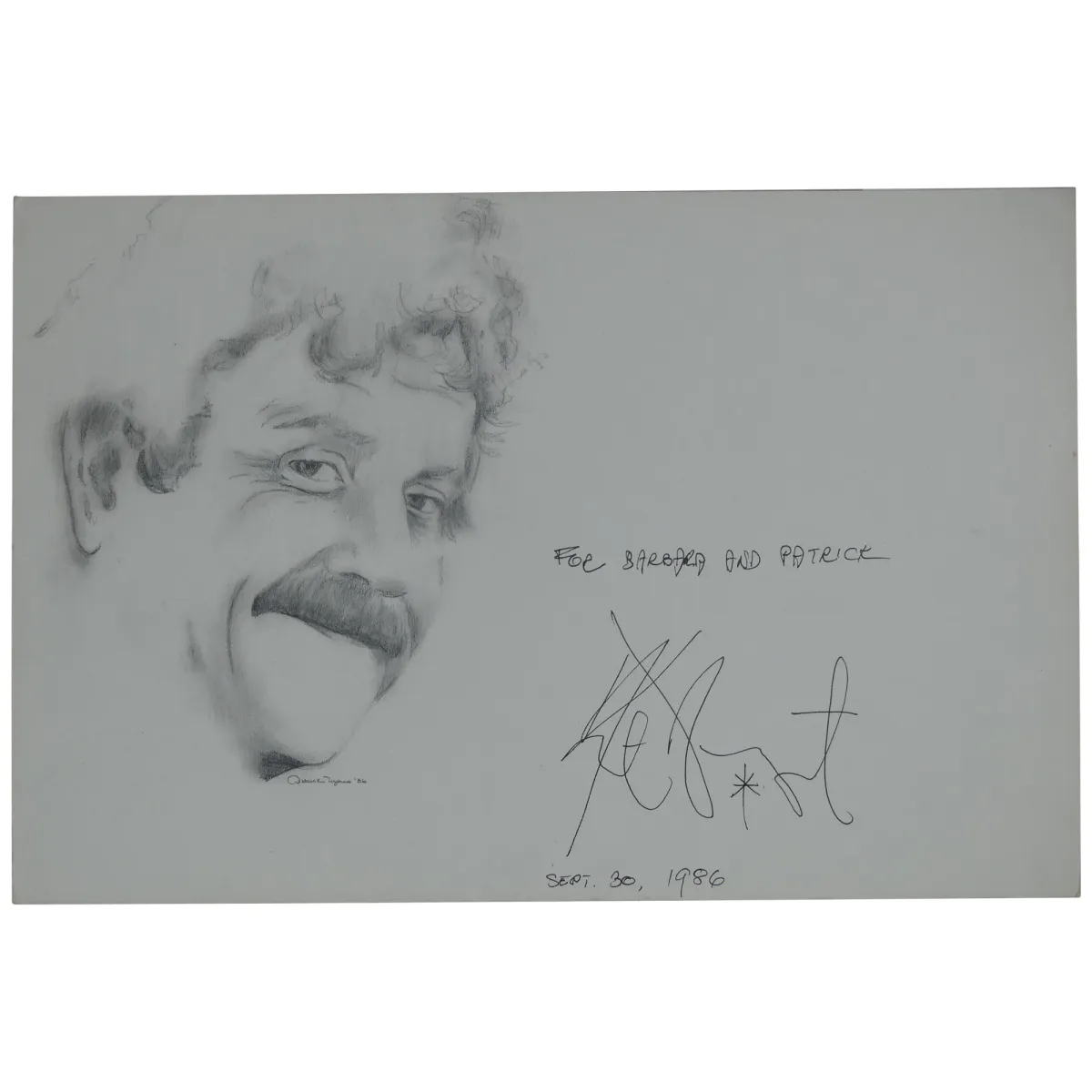 Photo: Kurt Vonnegut, via downtownbrown.cdn.bibliopolis.com
For twenty-three years, he tried. He started novels, abandoned them. He began stories, threw them away. He told friends he was working on "something about the war," but nothing emerged except silence. The experience had broken something fundamental in him — not just his faith in humanity, but his faith in language itself.
What Vonnegut didn't know was that this silence, this seeming creative paralysis, was preparing him to write one of the most important American novels of the 20th century.
The Boy Who Went to War
Vonnegut was barely twenty-two when he was captured during the Battle of the Bulge in December 1944. As a prisoner of war, he was sent to Dresden, a city so beautiful it was called "the Florence of the North." The Germans used POWs as laborers, and Vonnegut found himself working in a factory that produced vitamin supplements for pregnant women.
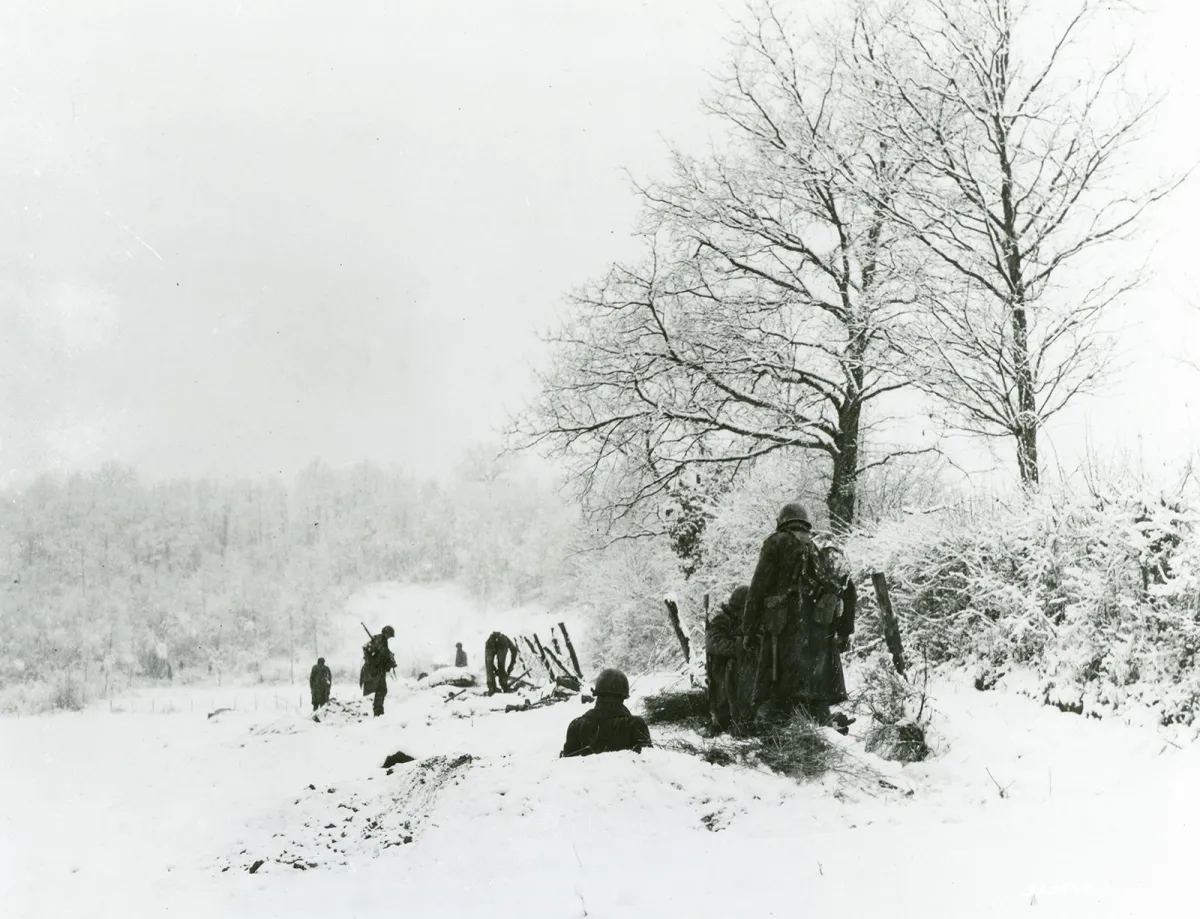 Photo: Battle of the Bulge, via cdn.britannica.com
On the night of February 13, 1945, everything changed. British and American bombers turned Dresden into an inferno that killed an estimated 25,000 civilians — men, women, children, refugees. Vonnegut and his fellow prisoners survived only because they were held in an underground slaughterhouse, Schlachthof Fünf. Slaughterhouse-Five.
When they emerged, the city was gone. Vonnegut spent the next several weeks helping to dig bodies from the rubble, loading corpses onto carts like cordwood. He was twenty-two years old.
The Words That Wouldn't Come
Back in America, Vonnegut tried to resume normal life. He married, had children, worked as a journalist, sold cars, opened an unsuccessful Saab dealership. But the war followed him everywhere. He suffered from what we now recognize as PTSD, though no one called it that in 1945.
Every attempt to write about Dresden failed. The experience was too vast, too senseless, too horrible to capture in conventional narrative. How do you describe the indescribable? How do you make sense of senselessness? How do you tell a story that feels like the end of all stories?
Vonnegut's earlier novels — Player Piano, Cat's Cradle, God Bless You, Mr. Rosewater — were successful, but they danced around the edges of his real subject. Critics praised his dark humor and satirical voice, but Vonnegut knew he was avoiding the thing that mattered most.
The Breakthrough That Broke Every Rule
In 1968, something shifted. Maybe it was the Vietnam War, which was tearing America apart and forcing the country to confront the reality of what war actually does to human beings. Maybe it was simply time. Or maybe Vonnegut finally realized that the conventional tools of storytelling — linear narrative, heroic characters, meaningful plot — were inadequate for his purpose.
Slaughterhouse-Five emerged as something unprecedented in American literature: a war novel that refused to glorify war, a story that acknowledged its own impossibility, a narrative that used science fiction, dark comedy, and radical structural experimentation to tell a truth that realistic fiction couldn't handle.
The novel's famous refrain — "So it goes" — appears after every mention of death, reducing the most profound human experience to a shrug of cosmic indifference. Its protagonist, Billy Pilgrim, becomes "unstuck in time," experiencing past, present, and future simultaneously because linear time can't contain the weight of what he's witnessed.
The Voice of a Voiceless Generation
When Slaughterhouse-Five was published in 1969, it didn't just tell Vonnegut's story — it spoke for an entire generation of Americans who felt equally traumatized by their country's capacity for violence. Vietnam veterans recognized their own experience in Billy Pilgrim's dissociation. Anti-war protesters found their moral outrage given literary form. Young Americans who felt alienated by their nation's military adventures discovered a voice that expressed their confusion and grief.
The novel became a cultural phenomenon, banned by school boards and beloved by students, denounced by veterans' groups and embraced by peace activists. It won the Hugo Award for science fiction and was adapted into a film. More importantly, it gave Americans permission to question the stories they'd been told about war, heroism, and national purpose.
The Power of Broken Language
What makes Vonnegut's achievement so remarkable is how he transformed his inability to speak directly about trauma into a new way of speaking that was more honest than directness could ever be. His fractured narrative style, his use of repetition and dark humor, his mixing of genres — all of it emerged from his recognition that some experiences break conventional storytelling.
By the time he finished Slaughterhouse-Five, Vonnegut had discovered that his war wound — the silence that had plagued him for over two decades — was actually his greatest literary gift. The inability to speak normally about abnormal experiences had forced him to invent a new language, one that could hold contradictions, express the inexpressible, and find meaning in meaninglessness.
The Legacy of Speaking the Unspeakable
Vonnegut's breakthrough opened doors for countless other writers struggling to articulate their own traumas. His influence can be seen in everything from Tim O'Brien's The Things They Carried to Jennifer Egan's A Visit from the Goon Squad — works that use experimental techniques to capture experiences that resist conventional narrative.
More broadly, Slaughterhouse-Five established a template for how art can process collective trauma. It showed that sometimes the most powerful way to speak truth is to acknowledge that truth can't be spoken directly — that meaning emerges not from explanation but from the honest admission that some things can't be explained.
So It Goes
Kurt Vonnegut spent twenty-three years unable to write about the most important experience of his life. When he finally found his voice, it changed American literature forever. His story reminds us that sometimes our greatest wounds become our most powerful gifts, and that the things we can't say often matter more than the things we can.
In a nation still struggling to process its own capacity for violence, Vonnegut's example endures: sometimes the most patriotic thing you can do is refuse to let your country's stories go unquestioned. Sometimes the most human thing you can do is admit that being human makes no sense at all.
So it goes.