From Wartime Washout to Kitchen Revolutionary: How Julia Child's Spectacular Career Failure Led to Culinary Gold

The Spy Who Couldn't
In 1942, Julia McWilliams was exactly the kind of person the Office of Strategic Services didn't want. At 6'2", she was too tall to blend into crowds. Her voice carried across rooms like a foghorn. And despite her prestigious Smith College education, she possessed what her OSS supervisors delicately termed "a complete lack of aptitude for clandestine work."
She tried anyway. For three years, Julia stumbled through various intelligence roles, filing reports no one read and developing shark repellent that didn't work. Her colleagues remember her as enthusiastic but hopeless—the kind of person who would accidentally blow her own cover by asking too many questions at the wrong volume.
By war's end, Julia was 33, unmarried, and convinced she was destined for a life of pleasant mediocrity. She had no particular talents, no burning passions, and no idea what to do with herself. So when her new husband Paul Child got stationed to Paris in 1948, she tagged along with the resigned air of someone who had run out of better options.
The Accidental Education
Paris in 1948 was still rebuilding from the war, but its restaurants were awakening from their long slumber. Julia, with nothing but time and a government housing allowance, began eating her way through the city. Her first meal at La Couronne in Rouen—sole meunière, oysters, and wine—hit her like a religious revelation.
"I had never tasted anything so perfectly delicious in my life," she later wrote. But here's what made Julia different from every other American tourist having a food epiphany in France: she didn't just want to eat the food. She wanted to understand it.
While Paul worked at the embassy, Julia enrolled at Le Cordon Bleu. Her classmates were mostly war widows learning practical skills for survival. Julia was a bored diplomat's wife learning for pure joy. The difference showed in everything she did.
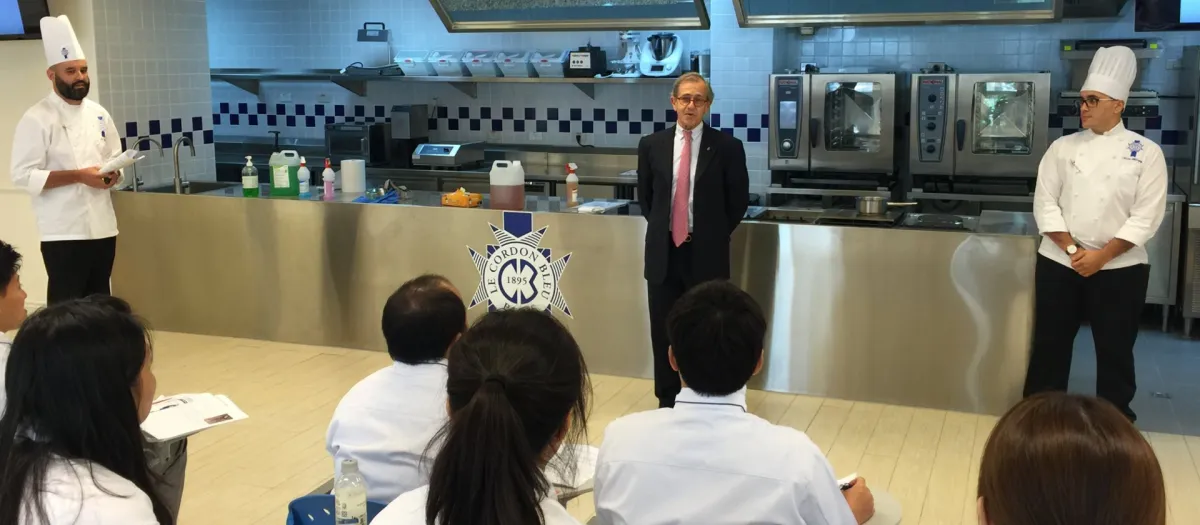 Photo: Le Cordon Bleu, via www.cordonbleu.edu
The Gift of Being an Outsider
What Julia's OSS supervisors saw as fatal flaws—her inability to keep quiet, her compulsive need to understand every detail, her American directness—turned out to be exactly what French cooking instruction needed. She asked questions that annoyed her teachers but illuminated techniques that French cooks took for granted.
Why this temperature? Why this timing? Why couldn't you substitute this for that? Her instructors initially found her exhausting, but Julia's relentless curiosity forced them to articulate knowledge they'd absorbed through intuition.
Meanwhile, her height—that liability in spy work—became an asset in professional kitchens. She could reach high shelves, work comfortably at standard prep tables, and command attention in chaotic kitchen environments.
The Ten-Year Accident
Julia spent the next decade bouncing between Paul's diplomatic postings—France, Germany, Norway, back to France. Each move felt like another detour from any coherent career path. She was approaching 40 with nothing to show for it but an obsessive knowledge of French cooking techniques and a growing collection of recipes she'd been testing and retesting.
Then, in 1959, a small American publisher took a chance on a massive cookbook manuscript by three unknown women. "Mastering the Art of French Cooking" was 734 pages of obsessively detailed instructions written by someone who understood both French technique and American kitchens.
The book succeeded precisely because of Julia's roundabout path to cooking. Her spy training taught her to break down complex processes into clear, actionable steps. Her years of diplomatic entertaining gave her insight into what intimidated American home cooks. Her late start meant she remembered what it felt like to not know anything.
The Revolution That Almost Wasn't
By 1961, Julia was 49 and living in Cambridge, Massachusetts, promoting a cookbook that was slowly finding its audience. Then a book editor at The Boston Globe decided to interview her on local television. Julia had never been on TV before, but her years of government work had taught her to project confidence even when she felt clueless.
The interview was supposed to last ten minutes. Julia took over the studio, cooking an omelet while explaining technique with the same patient intensity she'd once brought to filing intelligence reports. The phones started ringing before she finished cooking.
"The French Chef" debuted on Boston public television in 1963. Julia was 51, an age when most people are settling into whatever career they've built. Instead, she was accidentally inventing a new form of television and transforming how Americans thought about food.
The Long Game of Getting Lost
Julia Child's story isn't really about cooking. It's about the hidden value of seeming to waste time. Every detour that felt like failure—the botched spy career, the aimless diplomatic years, the late start in kitchens—was quietly building the exact combination of skills that would make her irreplaceable.
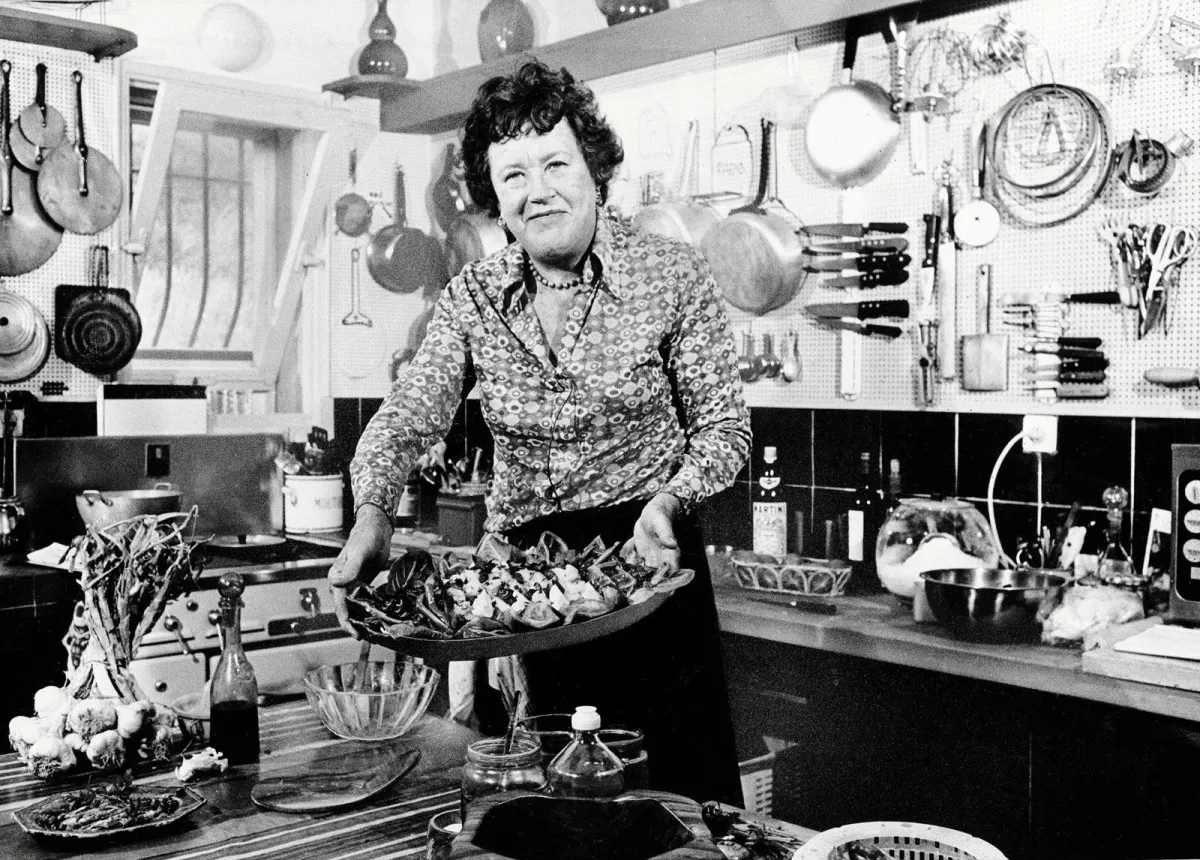 Photo: Julia Child, via cdn.britannica.com
Her intelligence background taught her systematic thinking. Her diplomatic experience gave her cultural fluency. Her late start kept her curious instead of arrogant. Her outsider status forced her to explain what insiders took for granted.
By the time she died in 2004, Julia had fundamentally changed American food culture. But perhaps more importantly, she proved that the most meaningful careers often begin with the courage to keep trying things you're not immediately good at.
Sometimes the best thing about failing at your dream job is that it forces you to discover what you're actually meant to do.