The Printer Who Saved Lives and Paid the Price: How One Man's Illegal Documents Became Thousands of People's Legal Right to Live
The Art of Survival
In 1943, 18-year-old Adolfo Kaminsky faced a problem that would have paralyzed most teenagers: his family was about to be deported to a Nazi death camp, and their only hope of survival lay in documents that didn't exist. So Kaminsky, who had learned basic printing techniques working in his father's small shop in Paris, decided to create them.
What started as a desperate attempt to save his own family became one of the most remarkable rescue operations of World War II. By the time the war ended, Kaminsky's forged documents had given new identities to an estimated 14,000 Jewish adults and children, providing them with the papers they needed to escape Nazi-occupied Europe.
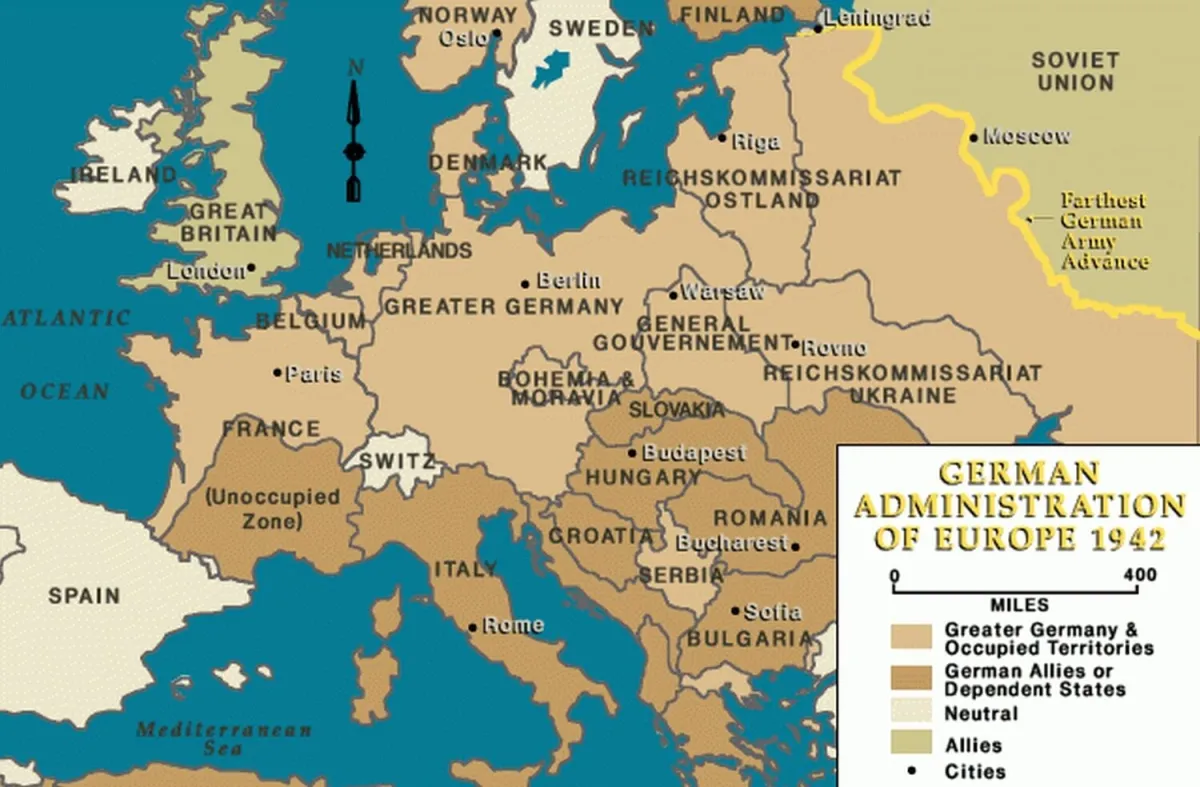 Photo: Nazi-occupied Europe, via primary.jwwb.nl
The twist in this story isn't that Kaminsky succeeded—it's that after the war, several Allied governments prosecuted him for the very crimes that had helped preserve their citizens' lives.
Learning the Trade Under Fire
Kaminsky's education in forgery began with necessity and desperation. His family—Russian Jews who had fled to France in the 1920s—were among thousands marked for deportation as the Nazi occupation tightened its grip on French Jews. Young Adolfo discovered that survival often came down to having the right piece of paper at the right moment.
His first attempts were crude, but they worked. A hastily altered identity card here, a backdated birth certificate there—small deceptions that meant the difference between life and death. Word of his skills spread through the underground networks that were forming to resist the occupation.
What made Kaminsky extraordinary wasn't just his technical ability—it was his willingness to treat each forged document as a sacred trust. He understood that a single mistake, one smudged ink mark or inconsistent stamp, could send entire families to their deaths.
The Underground Assembly Line
As demand for his services grew, Kaminsky developed what amounted to an underground identity factory. Working from a series of hidden locations across Paris, he created an entire system for producing false documents that could pass even careful inspection.
His operation required skills that no legitimate printer would ever need: aging paper with tea and cigarette smoke, replicating the exact ink formulations used by different government offices, and creating convincing wear patterns that suggested documents had been carried and handled for years.
Kaminsky also had to become an expert in bureaucracy itself, understanding not just what official documents looked like, but how they functioned within the larger system. He studied the subtle differences between papers issued in different regions, the various stamps and seals used by different offices, and the administrative procedures that determined whether a document would be accepted or questioned.
The Weight of Other People's Lives
What separated Kaminsky from ordinary criminals was the crushing responsibility he carried. Every document he created represented not just one life, but often entire families whose survival depended on his craftsmanship. Children who needed to become French citizens overnight. Adults who had to transform from Jewish refugees into Catholic farmers or Protestant shopkeepers.
Kaminsky later recalled working for days without sleep, knowing that delays could mean death for the people waiting for their new identities. He developed techniques for mass production without sacrificing quality, creating templates that could be quickly customized while maintaining the individual details that made each document believable.
The psychological toll was enormous. Kaminsky was essentially playing God, deciding who got the documents that could save their lives and who would have to wait—potentially too long. The weight of those decisions stayed with him long after the war ended.
When Liberation Became Prosecution
The end of World War II should have been Kaminsky's moment of vindication. The governments he had helped preserve were back in power, the people he had saved were alive and free, and the Nazi regime that had necessitated his crimes was defeated.
Instead, Kaminsky found himself facing prosecution for forgery, fraud, and counterfeiting—the same crimes that had saved thousands of lives. The legal system that had been restored saw only the technical violations of law, not the moral necessity that had driven them.
French authorities, eager to reestablish the rule of law after years of occupation, couldn't simply ignore widespread document fraud, even when that fraud had served the resistance. Kaminsky's case became a test of whether extraordinary circumstances could justify breaking laws that existed to maintain social order.
The Paradox of Justice
Kaminsky's prosecution revealed a fundamental tension in how societies handle moral complexity. The same legal framework that protected citizens' rights also criminalized the actions that had protected those citizens when their government couldn't.
The prosecutors weren't evil—they were trying to rebuild institutions that had been shattered by war and occupation. But they were applying peacetime standards to wartime actions, judging decisions made under extreme duress by the comfortable standards of restored normalcy.
Kaminsky spent two years in prison, convicted of crimes that had saved more lives than most soldiers. His case highlighted the uncomfortable truth that sometimes doing the right thing requires breaking the law—and that societies don't always know how to handle that contradiction.
The Skills That Couldn't Transfer
After his release, Kaminsky faced a peculiar challenge: how do you put "master forger" on a legitimate resume? The skills that had made him a hero during the war made him unemployable in peacetime. Potential employers saw only a convicted criminal, not someone who had risked his life to save others.
Kaminsky eventually found work as a photographer, using his eye for detail and his understanding of how documents were created to build a modest but honest living. He rarely spoke about his wartime activities, partly from modesty and partly because few people understood the moral complexity of what he had done.
The Documents That Outlived Their Creator
Many of the identities Kaminsky created during the war became permanent. Children who had been given new names and birthplaces to escape deportation grew up with those identities, building lives around the fictional histories he had crafted for them.
Families scattered across Europe and beyond carried documents that bore Kaminsky's invisible signature—the subtle techniques and artistic choices that had convinced Nazi bureaucrats they were examining legitimate papers rather than masterful forgeries.
In a sense, Kaminsky had done more than save lives—he had created new lives, giving people not just the chance to survive but the foundation to build entirely new existences in the post-war world.
The Recognition That Came Too Late
Decades after the war, as historians began to fully document the resistance networks that had operated across Nazi-occupied Europe, Kaminsky's contribution finally received recognition. Holocaust museums and historical societies honored him as a hero, acknowledging that his crimes had been acts of profound moral courage.
The governments that had once prosecuted him eventually awarded him medals and honors, tacitly admitting that justice had been more complex than their post-war legal proceedings had recognized. But for Kaminsky, the recognition came too late to undo the years of stigma and struggle that had followed his conviction.
The Legacy of Necessary Crime
Kaminsky's story forces us to confront uncomfortable questions about the relationship between law and morality. His actions were unquestionably illegal—he had violated the fundamental principles that govern how societies verify identity and maintain order. But his actions were also unquestionably moral—he had used his skills to preserve human life when legal institutions had failed to do so.
The thousands of people who survived the Holocaust because of Kaminsky's forged documents went on to build families, create businesses, make scientific discoveries, and contribute to their communities in countless ways. Their children and grandchildren exist because one young man was willing to break the law when the law had broken down.
Sometimes the greatest service we can provide to society is refusing to accept what society tells us is acceptable. Kaminsky understood that when legal systems fail to protect human dignity, ordinary citizens have to step up—even when stepping up means stepping outside the law. His legacy reminds us that justice and legality aren't always the same thing, and that sometimes the most important rules are the ones that aren't written down anywhere.