Seven Discoveries That Only Happened Because Someone Made a Colossal Mistake
The Moldy Mess That Saved Millions
Alexander Fleming was not a tidy scientist. In September 1928, the Scottish bacteriologist returned from vacation to find his London laboratory in complete disarray. Petri dishes covered every surface, many contaminated with mold and bacteria.
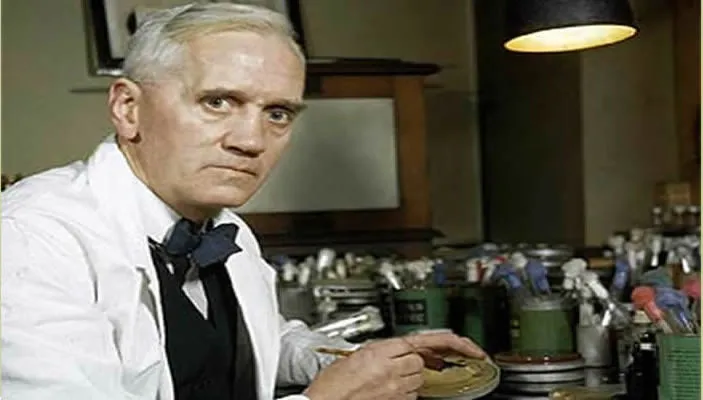 Photo: Alexander Fleming, via www.cronicaviva.com.pe
Most researchers would have thrown everything away and started fresh. Fleming almost did. But as he sorted through the mess, one dish caught his eye. Around a blob of mold, all the bacteria had died.
Fleming's sloppy housekeeping had accidentally created the conditions for one of medicine's greatest discoveries. That contaminated dish contained penicillin, which would go on to save an estimated 200 million lives.
The irony wasn't lost on Fleming. "One sometimes finds what one is not looking for," he later said. "When I woke up just after dawn on September 28, 1928, I certainly didn't plan to revolutionize all medicine."
The Sweetest Mistake in Chemistry
Constantin Fahlberg was having a terrible day in his Johns Hopkins laboratory in 1879. The chemist was working with coal tar derivatives when a beaker shattered, covering his hands with an unknown chemical compound.
 Photo: Johns Hopkins, via ip.index.hr
Rushing to clean up, Fahlberg forgot to wash his hands before leaving for dinner. When he bit into a dinner roll that evening, something extraordinary happened—it tasted impossibly sweet.
Fahlberg raced back to his lab and began systematically tasting every surface he'd touched. (This was before anyone understood how dangerous random chemical tasting could be.) He eventually traced the sweetness to benzoic sulfimide, a compound 300 times sweeter than sugar.
That accidental discovery became saccharin, America's first artificial sweetener. Fahlberg's clumsiness had created a billion-dollar industry and given diabetics their first safe sugar substitute.
The Explosion That Lit Up the World
Christian Friedrich Schönbein was supposed to be working in his study, not experimenting in his wife's kitchen. But in 1845, the German-Swiss chemist couldn't resist mixing nitric and sulfuric acid while his wife was out.
When he accidentally spilled the mixture on the kitchen table, panic set in. Schönbein grabbed the nearest thing to clean it up—his wife's cotton apron. He hung the apron by the stove to dry, hoping to destroy the evidence before she returned.
Instead, the apron exploded.
Schönbein had accidentally created nitrocellulose, one of the first smokeless explosives. His domestic disaster revolutionized warfare, mining, and construction. It also became the foundation for early photographic film and, eventually, the movie industry.
His wife was not amused, but history was grateful.
The Sandwich That Conquered America
Ruth Wakefield was furious. It was 1938, and the owner of the Toll House Inn was trying to make chocolate cookies for her guests. But she was out of baker's chocolate.
 Photo: Toll House Inn, via deserttripabudhabi.com
In desperation, Wakefield grabbed a bar of Nestlé semi-sweet chocolate and broke it into pieces, hoping it would melt and distribute evenly through the dough. It didn't.
Instead of smooth chocolate cookies, she ended up with lumpy disasters studded with chocolate chunks. Wakefield was sure she'd ruined the entire batch.
But her guests were ecstatic. They devoured every "ruined" cookie and begged for more. Wakefield had accidentally invented the chocolate chip cookie, which would become America's most popular homemade treat.
Nestlé eventually bought her recipe for $1 and a lifetime supply of chocolate. Not a bad return on a baking mistake.
The Glue That Wouldn't Stick
Spencer Silver was trying to create the strongest adhesive in 3M's history. Instead, in 1968, he created the weakest.
The chemist's new formula produced a glue that barely stuck to anything and could be peeled off without leaving residue. His colleagues called it useless. Silver spent years trying to find a purpose for his "failed" adhesive.
The breakthrough came six years later when Silver's colleague Art Fry got frustrated with bookmarks falling out of his church hymnal. Fry remembered Silver's weak glue and realized it was perfect for removable bookmarks.
That "useless" adhesive became Post-it Notes, one of 3M's most profitable products. Silver's failure to make super-glue had accidentally created something far more valuable—a glue that was strong enough to stick but weak enough to remove.
The Microwave Accident That Changed Kitchens
Percy Spencer was testing a military radar system at Raytheon in 1945 when he noticed something odd. The chocolate bar in his pocket had melted.
Most engineers would have assumed the factory was too hot. But Spencer was curious. He placed popcorn kernels near the radar magnetron and watched them pop. Then he tried an egg, which exploded.
Spencer realized that microwaves could cook food faster than any conventional method. His accidental discovery led to the microwave oven, which would eventually sit in 90% of American kitchens.
The technology that was supposed to help win wars had accidentally revolutionized how America ate dinner.
The Photography Flop That Became Art
Edwin Land's three-year-old daughter asked a simple question in 1943: "Why can't I see the picture now?"
Land, a brilliant inventor, had just taken her photo with a conventional camera. He tried to explain that film needed to be developed in a darkroom, but his daughter's impatience sparked an idea.
What if cameras could develop pictures instantly?
Land spent years trying to create instant photography, failing repeatedly. His early prototypes were disasters—photos that were blurry, faded, or didn't develop at all.
But each failure taught him something new. By 1948, Land had perfected the Polaroid camera, which could produce finished photographs in 60 seconds.
His "failed" attempts to satisfy a child's impatience had created a new art form and a billion-dollar company.
The Beautiful Mess of Discovery
These stories share a common thread: the willingness to see opportunity in disaster. Each of these discoveries required someone to look at their "failure" and ask, "What if this is actually something wonderful?"
In a culture obsessed with getting everything right the first time, these accidental breakthroughs remind us that sometimes the most important step forward comes from falling down. The next time you make a spectacular mistake, don't just clean it up—study it first. You might be holding the future in your hands.