From Billboards to Breaking News: How a Grieving Son Built the Network That Never Sleeps
The Call That Changed Everything
March 5, 1963. Ted Turner was twenty-four years old, kicked out of Brown University, and working at his father's struggling billboard company in Atlanta when the phone rang. Ed Turner, his demanding, brilliant, tormented father, had shot himself at the family plantation in South Carolina.
 Photo: Ted Turner, via sciencewaveproperties.weebly.com
The young Turner inherited more than grief that day. He got a company drowning in debt, employees who doubted his ability, and competitors circling like vultures. Most people would have sold what they could and walked away. Turner did the opposite—he doubled down on everything his father had taught him about taking impossible risks.
"I was mad at him for leaving me," Turner would later say. "So I decided to show him what I could really do."
What he did was build an empire that would eventually reach into every American living room, but not before nearly destroying himself in the process.
The Billboard King Nobody Wanted
Turner Advertising Company wasn't exactly prime real estate when Ted took over. The outdoor advertising business was considered the bottom rung of marketing—billboards were what you bought when you couldn't afford television or newspapers. But Turner saw something others missed: location was everything, and he was willing to go anywhere to get the right spots.
He spent the 1960s driving across the South, charming property owners, outbidding competitors, and slowly building what would become the largest billboard company in the Southeast. His methods were unorthodox—he'd show up at farmers' houses with a bottle of bourbon and wouldn't leave until he had a handshake deal for their roadside property.
But Turner was already thinking bigger. In 1970, he made a move that left everyone scratching their heads: he bought a failing UHF television station in Atlanta for $3 million. Channel 17 was so small that most people didn't even know it existed.
The Station That Nobody Watched
WTCG-TV was everything wrong with local television in 1970. It showed old movies, reruns of ancient sitcoms, and Atlanta Braves baseball games to an audience that could have fit in a high school gymnasium. The station was hemorrhaging money, and Turner's own board of directors thought he'd lost his mind.
That's when Turner's genius for seeing around corners kicked in. While other station owners were trying to compete with the big three networks on their terms, Turner decided to change the game entirely. He started buying up the cheapest programming he could find—old westerns, Three Stooges shorts, Atlanta Hawks basketball—and programming them around the clock.
The strategy worked, but not the way anyone expected. WTCG became the station you watched when you couldn't sleep, when you were sick at home, or when you just wanted something mindless on in the background. Turner had accidentally invented comfort television.
The Satellite Gamble
In 1976, Turner made the bet that would change everything. He convinced a satellite company to beam his little Atlanta station across the entire country, creating what he called "SuperStation WTCG." Cable companies could pick up the signal and offer it to their subscribers for free.
The idea was so radical that most industry experts predicted it would fail within a year. Why would anyone in New York or Los Angeles want to watch Atlanta television? Turner's answer was simple: because it was always on, and it was always the same.
He was right. By 1979, the SuperStation was reaching 4 million homes. Turner had created the first national cable network, and he'd done it by accident.
The News Network Nobody Asked For
Success with the SuperStation should have been enough for most people. Turner was making millions, his company was growing, and he'd proven all the doubters wrong. But his father's voice was still in his head, pushing him to think bigger, take more risks, bet everything on the next impossible idea.
In 1980, that impossible idea was a 24-hour news network.
The concept was so foreign that Turner had trouble explaining it to potential investors. Why would anyone want news all day long? The big three networks already covered everything important in thirty minutes each evening. What could possibly fill twenty-four hours?
Turner's answer revealed the depth of his vision: "News doesn't stop happening at 6:30 PM."
The Network That Changed the World
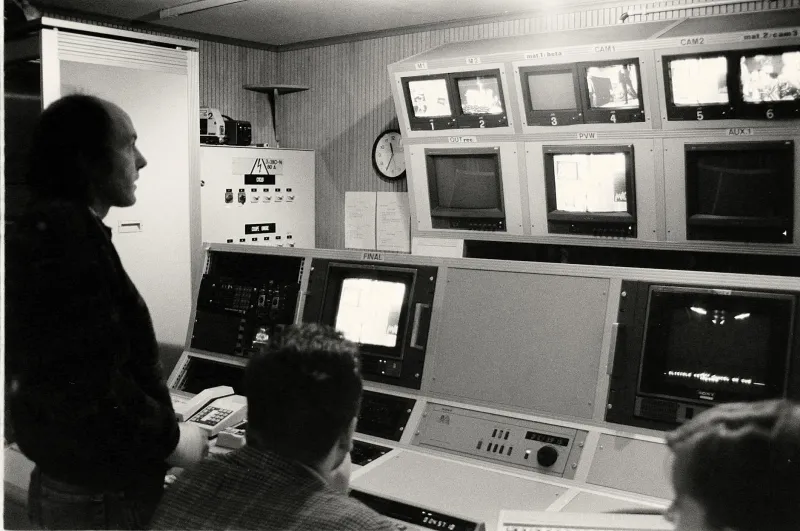
CNN launched on June 1, 1980, with a budget that was laughable by network standards and a staff of mostly young journalists who couldn't get jobs anywhere else. The first day was a disaster—technical problems, missed cues, and anchors who looked like they'd rather be anywhere else.
But Turner had built something that had never existed before: a news network that was always live, always ready, always there when something important happened. When the space shuttle Challenger exploded in 1986, CNN was the only network broadcasting live. When the Berlin Wall fell in 1989, CNN was there. When the Gulf War began in 1991, CNN owned the story.
"We didn't invent 24-hour news," Turner would later reflect. "We just figured out that the world never stops, so why should we?"
The Legacy of a Grieving Son
By the time Turner sold CNN to Time Warner in 1996, the network he'd built in defiance of his father's death had become the most trusted name in news. The billboard company that started it all was long gone, but the lesson remained: sometimes the best way to honor the dead is to prove them wrong about what's possible.
Turner's story isn't just about building a media empire—it's about how the deepest setbacks can become the foundation for the most audacious dreams. His father never got to see CNN, never got to watch his son change the world. But in a way, Ed Turner's final, terrible decision became the first domino in a chain reaction that would reshape how humanity stays informed.
Sometimes the people who hurt us most also give us the greatest gift: the burning need to prove that we're capable of more than anyone—including ourselves—ever imagined.