One Man's Junk: Seven Fortunes Built From Things Nobody Else Wanted
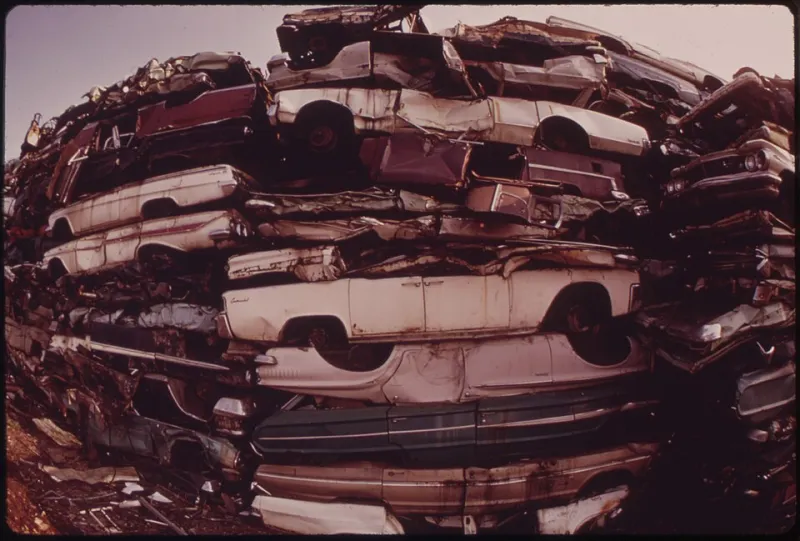
Photo: Dick Swanson, Public domain, via Wikimedia Commons
One Man's Junk: Seven Fortunes Built From Things Nobody Else Wanted
There's a particular kind of vision that doesn't get celebrated enough. Not the vision that imagines something entirely new, but the vision that looks at what everyone else has thrown away and sees something worth saving.
America has a long, underappreciated tradition of exactly that. Some of the country's most durable fortunes weren't built on brilliant inventions or perfect timing — they were built on scrap heaps, industrial byproducts, and the stubborn refusal to accept that something was truly worthless. Here are seven of the best.
1. Andrew Carnegie and the Scrap That Built Steel
Before Carnegie was the richest man in America, he was a Scottish immigrant kid working for pennies in a Pittsburgh telegraph office. His path to steel began not with a grand vision but with a deeply practical obsession: waste.
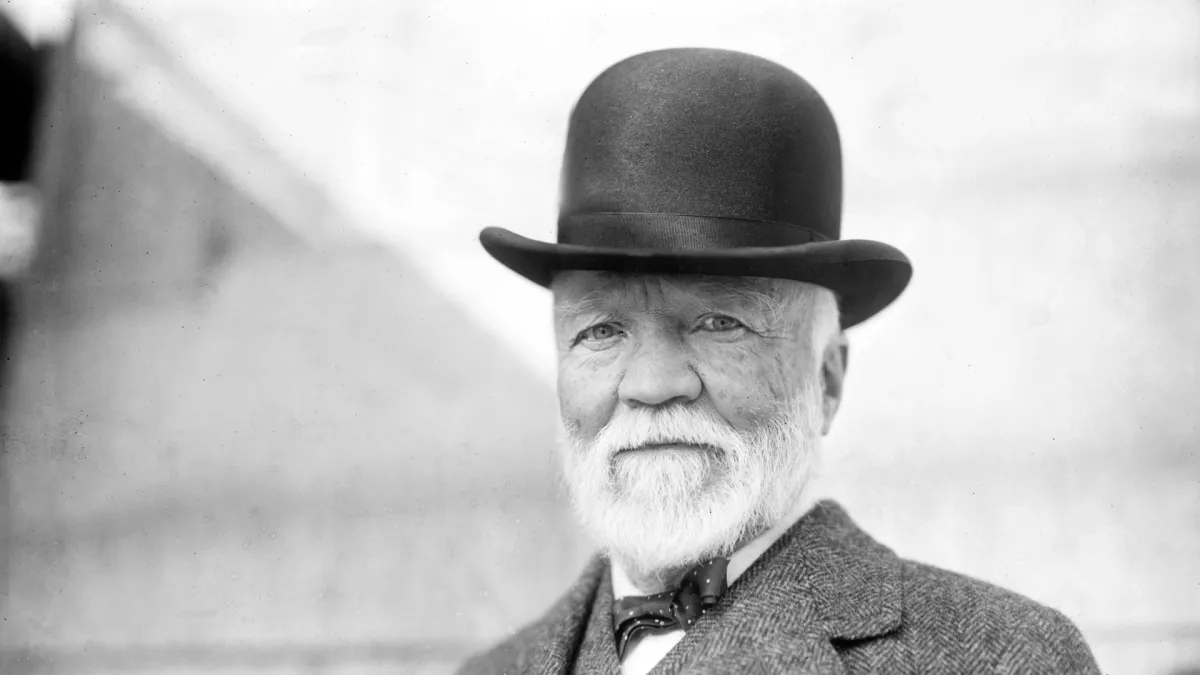 Photo: Andrew Carnegie, via assets.editorial.aetnd.com
The steel industry of the 1870s was spectacularly inefficient. Mills produced enormous quantities of scrap metal — off-cuts, failed batches, slag — that were simply discarded. Carnegie saw a second life in all of it. By systematically integrating scrap back into his production process and obsessively tracking where material was being lost, he drove his costs below every competitor in the country.
While other mill owners focused on revenue, Carnegie focused on what they were throwing away. That difference in perspective eventually made him worth roughly $400 billion in today's dollars.
2. William Colgate and the Fat Nobody Wanted
In early 19th-century New York, the rendering of animal fat was an unglamorous, foul-smelling business that most respectable entrepreneurs wanted nothing to do with. William Colgate, a soap and candle maker who had gone bankrupt once already, saw it differently.
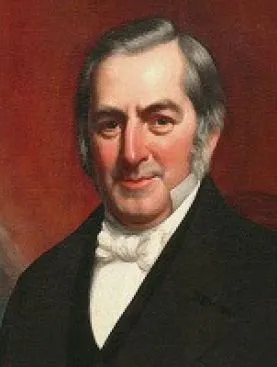 Photo: William Colgate, via madeupinbritain.uk
The tallow — rendered animal fat — that butchers and slaughterhouses couldn't move fast enough was, to Colgate, a primary ingredient. He refined his process, improved his formulas, and built a business around transforming something the meat industry treated as a nuisance byproduct into a consumer product people actually wanted in their homes.
The company he founded in 1806 eventually became Colgate-Palmolive, a global household goods empire with annual revenues north of $19 billion. It started with fat that nobody else wanted to deal with.
3. Herbert Dow and the Chemical Waste That Changed Everything
In the 1890s, the bromine extraction industry was dominated by a German cartel that flooded the American market with artificially cheap product to crush any domestic competition. When Herbert Dow — a young chemist who had already gone bankrupt building his first electrochemical plant — tried to compete, they cut prices below his cost of production and told him to quit.
Dow's response was to look at what everyone else in his industry was discarding. The electrolytic process he'd developed produced bromine, yes, but it also produced chlorine as a byproduct that most operations simply vented into the air or dumped. Dow started capturing it. Then he started selling it. Then he started building an entire product line around it.
The "waste" that the established industry ignored became the foundation of the Dow Chemical Company — today one of the largest chemical manufacturers on earth.
4. Milton Hershey and the Chocolate Nobody Thought Would Sell
Milton Hershey failed. Twice. His first candy company in Philadelphia collapsed. His second, in New York, collapsed too. By the time he was in his late 30s, he had a reputation as a likable, enthusiastic businessman who couldn't quite make anything stick.
What he did have was access to something the confectionery industry largely ignored: milk. Hershey was operating a successful caramel business in Lancaster, Pennsylvania, surrounded by dairy farms. Milk chocolate existed — Swiss chocolatiers had been making it for years — but it was expensive, temperamental to produce, and considered a luxury product for wealthy consumers.
Hershey figured out how to make it cheap. The "waste" in his case wasn't a physical byproduct but a discarded market — the everyday American consumer that premium chocolate makers had no interest in serving. He built his entire empire on them.
5. Arthur Vining Davis and the Metal That Almost Wasn't
In the 1880s, aluminum was genuinely considered a precious metal. Napoleon III served state dinners on aluminum plates to impress guests — the really important ones got gold and silver, but aluminum was exotic enough to be a status symbol. Then the Hall-Héroult process made it cheap to produce, and suddenly the metal that had been precious became, in the eyes of most investors, almost worthless.
Arthur Vining Davis joined the Aluminum Company of America (Alcoa) when it was still a tiny operation that most of the business world thought was chasing a dead end. While others saw a commodity that had lost its glamour, Davis saw a material with almost unlimited industrial applications that nobody had fully explored yet.
He spent decades developing those applications — aluminum foil, aircraft components, construction materials — and built Alcoa into one of the most powerful industrial companies in American history. The metal everyone had written off became the backbone of the 20th century.
6. Ray Kroc and the Restaurant System Nobody Else Saw
Ray Kroc was 52 years old, selling milkshake machines, and not particularly successful when he drove out to San Bernardino, California, to figure out why a small hamburger stand had ordered eight of his machines at once. What he found was a McDonald brothers' operation running with a precision and efficiency that the restaurant industry had never seen.
The brothers weren't interested in expanding. They were comfortable. To them, the system they'd built was a solution to their own operational problems — the "waste" in this case was a business model sitting idle, producing results for two people when it could have been producing results for thousands.
Kroc licensed it, then bought it outright for $2.7 million in 1961. He didn't invent the fast food concept. He rescued it from the people who had invented it and didn't want to do anything more with it. The McDonald brothers' discarded ambition became the largest restaurant chain in human history.
7. Ruth Handler and the Doll Concept Mattel Didn't Want
In the early 1950s, Ruth Handler noticed that her daughter Barbara preferred playing with adult paper dolls over baby dolls — acting out grown-up scenarios rather than playing pretend mommy. Handler pitched the idea of a three-dimensional adult fashion doll to the executives at Mattel, the toy company she co-founded with her husband.
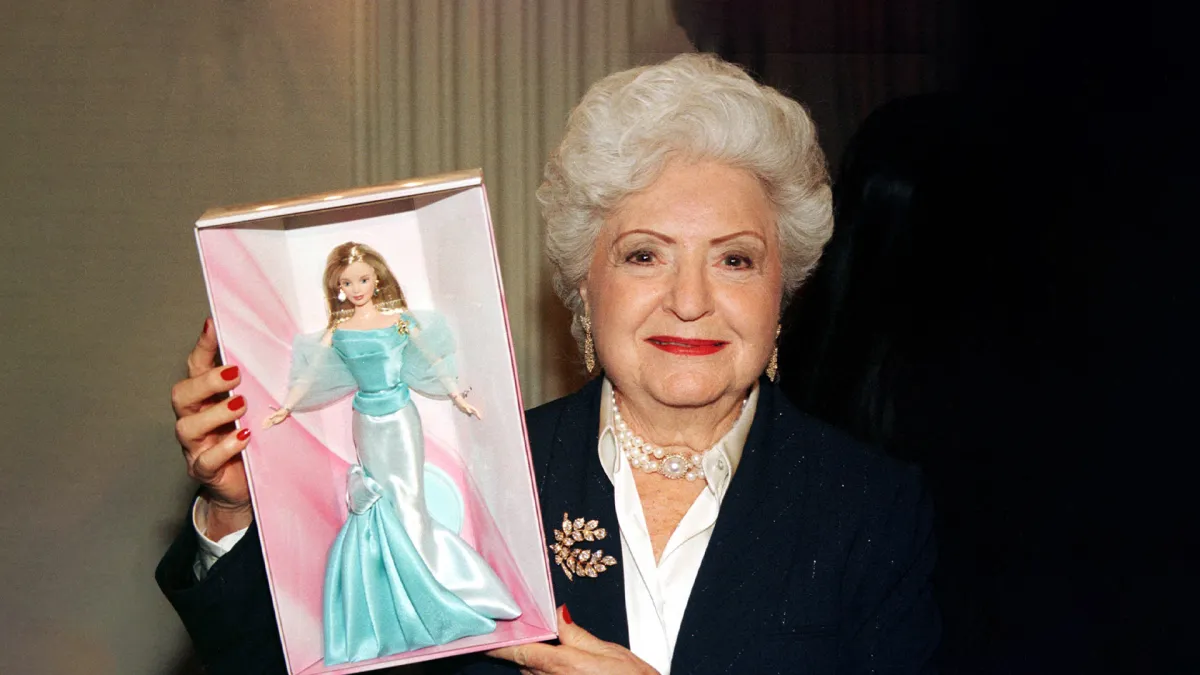 Photo: Ruth Handler, via www.the-sun.com
They passed. Repeatedly. The toy industry consensus was firm: mothers bought toys, mothers didn't want their daughters playing with a doll that had a figure, and the whole concept was a non-starter.
Handler persisted for years, developing the idea on the margins of the company's attention, refining a concept that her colleagues considered a waste of time. The "Barbie" doll debuted at the American International Toy Fair in 1959. Mattel sold 350,000 units in the first year. Sixty-plus years later, Barbie remains one of the best-selling toys in history.
The idea nobody at her own company wanted to pursue became the product that defined the company forever.
The Pattern Underneath
Look at these seven stories long enough and a pattern emerges. None of these people had access to resources that others didn't. What they had was a different relationship with the concept of worthlessness. They questioned it. They poked at it. They asked why something was considered waste rather than simply accepting that it was.
The scrap heap, it turns out, is one of the most reliable places in the world to find a fortune. You just have to be willing to dig through it.