Broke, Addicted, and Out of Options: The Accidental Recipe That Became the World's Most Recognizable Brand
Broke, Addicted, and Out of Options: The Accidental Recipe That Became the World's Most Recognizable Brand
There's a version of the Coca-Cola story that gets told in business schools. It involves innovation, vision, and the genius of American enterprise. It's a great story. It's also almost entirely wrong.
The real story starts with a man who was losing. Badly.
The Pharmacist Who Couldn't Catch a Break
By the spring of 1886, John Stith Pemberton was fifty-five years old and running out of time. He'd spent decades as a pharmacist in Atlanta, Georgia, dabbling in patent medicines — those gloriously unregulated tonics and elixirs that filled nineteenth-century America with equal parts hope and snake oil. He'd had modest successes. He'd had bigger failures. And somewhere along the way, after being wounded during the Civil War, he'd developed a dependence on morphine that shadowed every waking hour.
 Photo: Atlanta, Georgia, via img.freepik.com
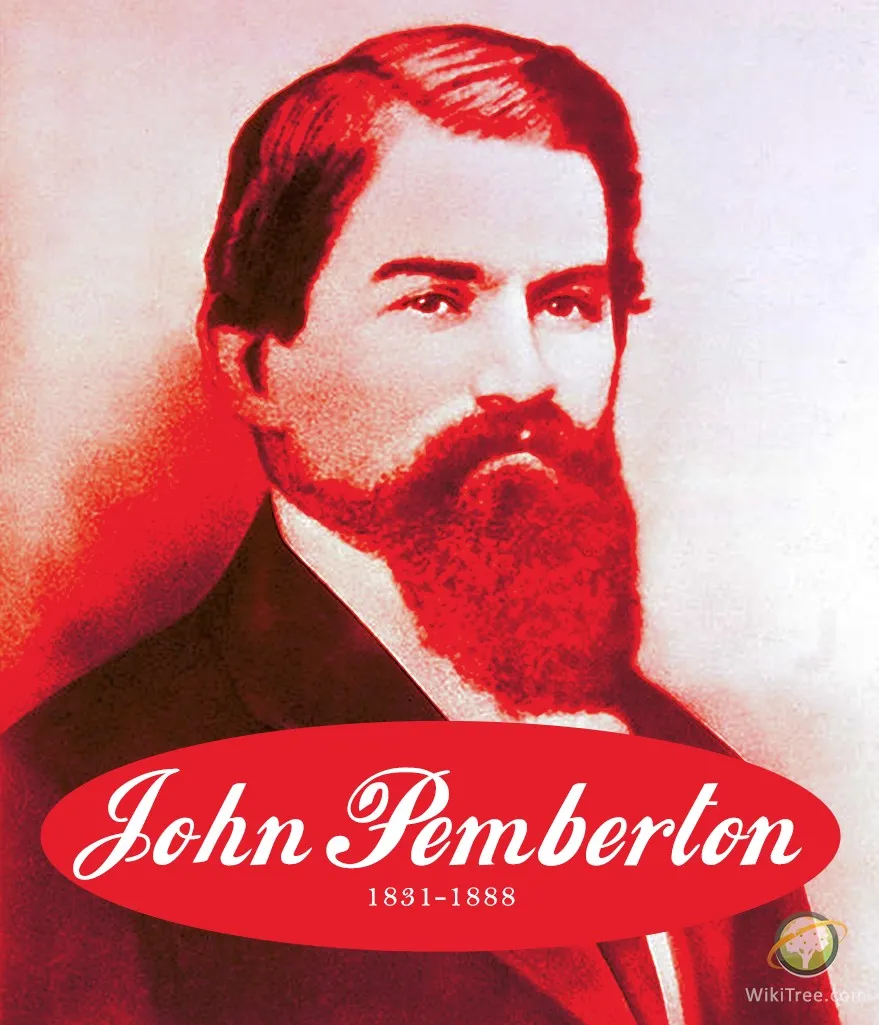 Photo: John Stith Pemberton, via i.pinimg.com
He owed money. His health was deteriorating. And the one product he'd staked his recent fortunes on — a coca-wine called Pemberton's French Wine Coca — had just been dealt a killing blow when Atlanta went dry under a local prohibition ordinance. The drink he'd been selling, legally and somewhat successfully, was suddenly illegal in his own city.
So he did what desperate people do. He improvised.
A Recipe Born From Necessity
Pemberton's French Wine Coca had two main active ingredients: cocaine (derived from coca leaves) and caffeine (from kola nuts). When prohibition yanked away the wine, Pemberton needed a non-alcoholic base that could still carry those ingredients and taste good enough to sell. He started experimenting in a three-legged brass pot in his backyard, mixing combinations of oils, extracts, and sweeteners.
What he eventually landed on was a thick, caramel-colored syrup. It wasn't meant to be a soft drink. It was meant to be a medicinal tonic — something he could market as a cure for headaches, exhaustion, and what was then delicately called "morphine habit." The irony of an addicted man marketing a cocaine-laced syrup as a cure for addiction is not lost on history.
The carbonation, the detail that turned a medicinal syrup into the drink we know today, was almost certainly an accident. The most commonly accepted account holds that when Pemberton first brought his syrup to Jacobs' Pharmacy in Atlanta, a soda fountain clerk mixed it with carbonated water instead of still water. Customers liked it. The fizz stayed.
Pemberton priced it at five cents a glass and called it Coca-Cola.
The Man Who Never Got Rich Off His Own Invention
Here's where the story takes a turn that no business school case study lingers on too long.
Pemberton, still drowning in debt and in declining health, began selling off shares of his Coca-Cola recipe almost immediately. He was a man who needed cash now, not equity later. Over the course of about two years, he sold portions of his ownership to various Atlanta businessmen, including a savvy operator named Asa Griggs Candler, who had a talent for recognizing value that others were too distracted or too desperate to protect.
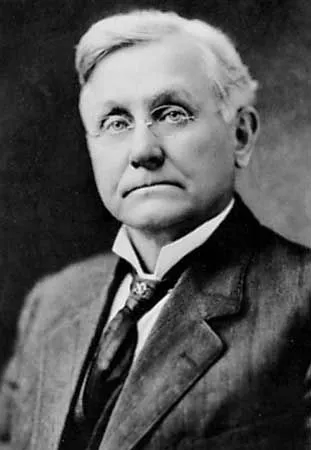 Photo: Asa Griggs Candler, via cdn.britannica.com
By 1888, Pemberton was dead. He passed away in August of that year, still poor, still in pain, never having seen any meaningful financial return from the product that would go on to become one of the most profitable consumer goods in the history of capitalism.
Candler, meanwhile, consolidated ownership of the formula, incorporated The Coca-Cola Company in 1892, and began an aggressive national marketing campaign. He eventually sold the company in 1919 for $25 million — roughly $430 million in today's dollars. The brand is now worth somewhere north of $90 billion.
Pemberton's heirs received essentially nothing.
What Desperation Actually Teaches You
It would be easy to read Pemberton's story as a tragedy, and in some ways it is. A man invents something extraordinary, gets too little credit and far too little money, and dies before the world understands what he made. That's a hard story.
But there's another way to read it — one that feels more honest to what actually drives human invention.
Pemberton didn't create Coca-Cola because he was brilliant, although he may well have been. He created it because he had no other moves left. Prohibition had closed one door. Debt had closed another. His health was failing and his options were narrowing by the day. The brass pot in the backyard wasn't a laboratory. It was a last resort.
And that last resort produced something the entire world still reaches for every single day.
There's a particular kind of creativity that only surfaces when the comfortable options have been exhausted. Pemberton's story is a masterclass in that phenomenon. He wasn't working from a position of strength or strategic vision. He was working from the bottom of the barrel, trying to solve a very immediate, very personal problem. The fact that his solution turned out to have universal appeal wasn't part of the plan. There was no plan. That was the point.
The Accidental Blueprint
More than a century later, Coca-Cola is sold in every country on earth except two. The recipe Pemberton cooked up in desperation has been tweaked and guarded and litigated over for generations. The brand is so embedded in American culture that it essentially became a symbol of America itself — exported around the world as shorthand for a particular kind of optimism and energy.
None of that was Pemberton's vision. He just needed to make rent.
The lesson here isn't that you should be broke and addicted in order to make something great. The lesson is subtler and more useful than that: the best ideas don't always come from the best circumstances. Sometimes they come from the worst ones. Sometimes the wall you've been backed against is exactly where the door was hiding all along.
Pemberton never got to walk through it. But he found it. And that, in its own painful way, is remarkable enough.