Wrong Fabric, Right Moment: The Bavarian Peddler Who Accidentally Dressed America

Photo: https://www.flickr.com/people/castawayvintage/, CC BY 2.0, via Wikimedia Commons
Levi Strauss didn't come to California to invent anything. He came to sell stuff.
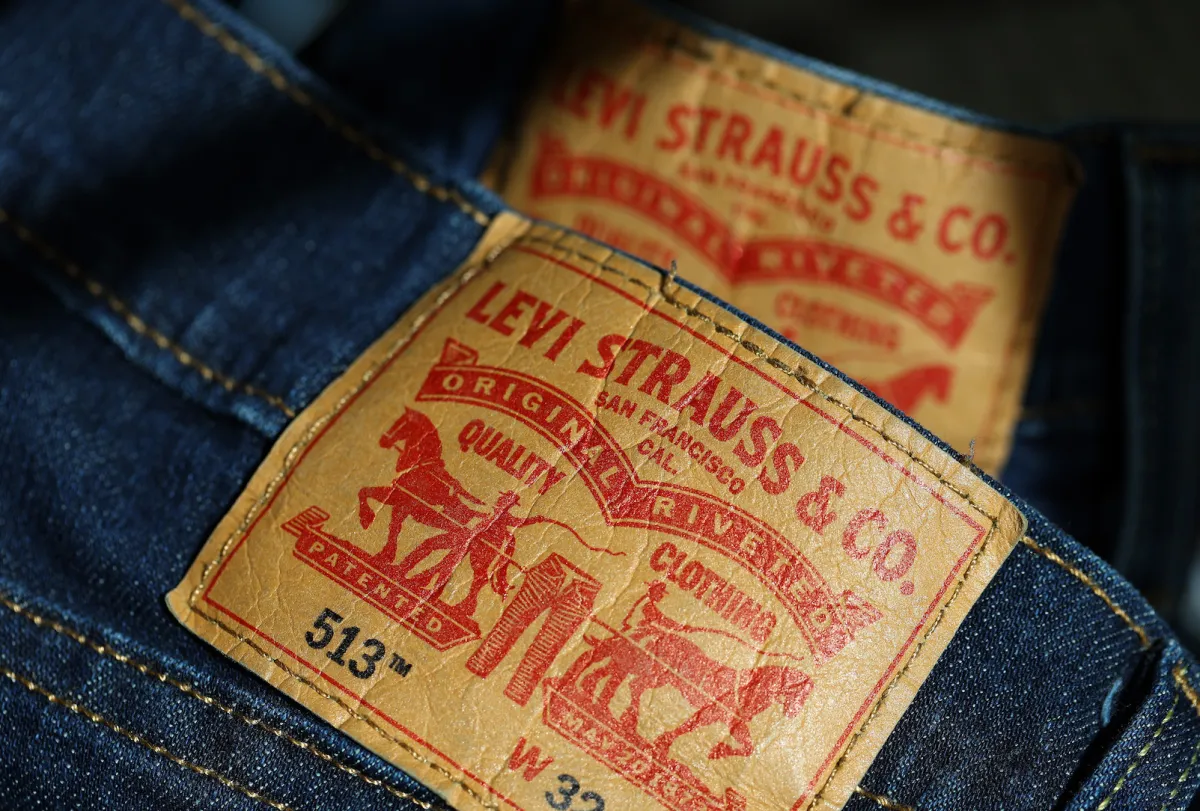 Photo: Levi Strauss, via sourcingjournal.com
It was 1853, and the Gold Rush was already a few years old. The easy money was gone — picked clean from the riverbeds by the time most fortune-seekers arrived — but the population boom it triggered was very much still happening. San Francisco had exploded from a sleepy coastal outpost into a chaotic, muddy, wildly energetic city almost overnight. Strauss, a 24-year-old Bavarian immigrant who had been working in his brothers' dry goods business in New York, figured there was real money to be made supplying the people who were supplying the miners. He wasn't wrong about that. He was just wrong about what they needed.
 Photo: San Francisco, via a.cdn-hotels.com
The Canvas Nobody Wanted
Strauss arrived with a load of brown canvas — the kind used for wagon covers and tents — fully expecting to move it quickly. Miners needed gear. He had gear. Simple.
Except it wasn't that simple. The canvas sat. Miners weren't in the market for tent fabric. What they were destroying at an astonishing rate was their clothing. Specifically, their pants. Digging, crouching, hauling, and crawling through rocky terrain chewed through fabric like nothing else. Every miner in California needed durable trousers, and nobody was making them well enough to keep up with the punishment.
Strauss pivoted — not out of brilliance, but out of necessity. He started cutting that unsellable canvas into work pants. They were rough, boxy, not particularly beautiful. But they held up. Word got around. He had stumbled onto something.
He eventually switched from canvas to a softer French fabric called serge de Nîmes — which Americans, unable to manage the French pronunciation, shortened to "denim." The pants got better. The business grew. But the real transformation was still years away, waiting in a tailor's shop in Reno.
The Man With the Rivets
Jacob Davis was a Latvian-born tailor working out of Nevada in the early 1870s. He was good at his job but perpetually broke — one of those craftsmen who can solve everyone else's problems but can't quite get ahead himself. One of his regular customers, a laborer, kept complaining that the pockets of his work pants blew out constantly. The stress points — corners of pockets, the base of the button fly — just couldn't handle the abuse.
Davis had a simple, almost absurdly practical idea: use copper rivets to reinforce those stress points. The same hardware used to hold together horse blankets and harnesses. He tried it. The pants held. Customers loved them. He started making riveted pants as fast as he could.
Here's where the story gets interesting. Davis knew he had something genuinely valuable on his hands, but he also knew he didn't have the $68 needed to file a patent — roughly $1,500 today. So in 1872, he wrote a letter to Levi Strauss & Co., the San Francisco supplier he'd been buying fabric from for years. He explained the idea, described the demand he was already seeing, and proposed a partnership: Strauss would cover the patent cost, and they'd split the business.
Strauss said yes almost immediately.
Patent 139,121
On May 20, 1873, the U.S. Patent Office issued Patent No. 139,121 to Jacob Davis and Levi Strauss for "an improvement in fastening pocket-openings." It is, by most accounts, the birth certificate of blue jeans.
The timing was extraordinary. America was in the middle of a massive westward expansion. The railroads were pushing through impossible terrain. Farming was industrializing. The country needed workers, and workers needed clothes that could survive actual work. Levi Strauss & Co. was ready to meet that demand at industrial scale in a way no one else could match.
The riveted waist overalls — they weren't called "jeans" yet — became the standard. Not because of clever marketing. Not because of a celebrity endorsement or a catchy slogan. Because they were genuinely, demonstrably better than anything else available. In a world before brand loyalty was manufactured, they earned it the old-fashioned way.
From Workwear to World Icon
For decades, Levi's were purely functional. Cowboys wore them. Farmers wore them. Construction workers wore them. They were the uniform of people who used their bodies to build things, and that identity was so strong it almost kept the brand from becoming something bigger.
Then the 20th century happened.
James Dean wore them in Rebel Without a Cause in 1955. Marlon Brando had already been photographed in them. Suddenly, denim wasn't just workwear — it was rebellion. It was youth. It was an attitude that couldn't be faked. The counterculture of the 1960s adopted Levi's as something close to a uniform. They were exported to Europe, where they became status symbols. In Soviet-era Russia, a pair of genuine American Levi's could fetch a week's wages on the black market.
None of that was planned. Levi Strauss died in 1902, long before any of it happened. He left his estate to charity and left behind a company that had been built on improvisation, a borrowed idea from a broke tailor, and a product that had started as a failure.
The Setback That Started Everything
Here's the part that gets lost in the legend: Levi Strauss's original plan didn't work. The canvas didn't sell. The business he thought he was building wasn't the business that made him famous.
What made him successful wasn't foresight. It was flexibility. He was willing to cut up his unsellable inventory and try something different. He was willing to say yes to a letter from a tailor he'd never met because the idea was good, even if the messenger was obscure.
The riveted denim jean is one of the most enduring products in commercial history — still sold in more than 110 countries, still recognizable to virtually every human being on earth. And it exists because a young immigrant from Bavaria couldn't move his canvas, and decided to do something else with it instead.
Sometimes the wrong product, at the right moment, with the right partner, becomes the only product that ever really mattered.