When Heartbreak Built Fortunes: Seven Americans Who Turned Their Deepest Loss Into Their Greatest Legacy

When Everything Falls Apart, Everything Becomes Possible
There's something almost cruel about the timing of great breakthroughs. They rarely arrive when we're feeling strong and confident. Instead, they tend to emerge from our most broken moments, when loss has stripped away everything we thought we knew about ourselves and our capabilities.
Seven Americans learned this truth the hard way—and in learning it, they created innovations that touched millions of lives while building business empires that outlasted their own grief.
1. Candy Lightner: The Mother Who Made Drunk Driving a National Emergency
In 1980, Candy Lightner was a real estate agent living a comfortable suburban life in California. Then a drunk driver killed her 13-year-old daughter Cari, and Lightner discovered that the man who destroyed her family had been arrested for drunk driving just two days earlier.
What broke her wasn't just the loss—it was learning that drunk driving was treated as a minor offense, a boys-will-be-boys transgression that rarely resulted in serious consequences. In her grief, Lightner saw something that sober policymakers had missed: drunk driving wasn't an accident, it was a choice, and choices had to have consequences.
Mothers Against Drunk Driving started at Lightner's kitchen table and grew into a movement that fundamentally changed American law and culture. By the time she stepped down as president, MADD had helped reduce drunk driving fatalities by 50% and turned what was once socially acceptable into a serious crime.
Lightner's empire wasn't built on profit—it was built on purpose. And that purpose was forged in the white-hot crucible of a mother's rage at a system that valued convenience over children's lives.
2. Pleasant Rowland: The Educator Who Built a Billion-Dollar Doll Company
Pleasant Rowland was a successful textbook author and former teacher when her mother died suddenly in 1985. Processing her grief, Rowland found herself thinking about legacy—about how we pass down stories and values to the next generation.
Shopping for her nieces, she was struck by how modern toys seemed designed to make girls want to grow up fast, rather than helping them understand their place in a larger story. In her grief-sharpened clarity, Rowland saw an opportunity that the toy industry had missed entirely.
American Girl wasn't just about dolls—it was about giving girls a sense of historical continuity, a connection to the struggles and triumphs of women who came before them. Each doll came with books that placed fictional characters in real historical moments, teaching girls that they were part of an ongoing story.
Rowland sold American Girl to Mattel for $700 million in 1998, but the real measure of her success wasn't financial. She had created a brand that helped millions of girls see themselves as protagonists in history rather than passive consumers of culture.
3. Dr. Jonas Salk: The Father Who Refused to Patent a Miracle
Jonas Salk wasn't driven to develop the polio vaccine by personal loss in the traditional sense—his devastating moment came from watching what the disease did to other people's children. But the grief of watching children suffer from a preventable disease created the same clarity of purpose that personal loss brings.
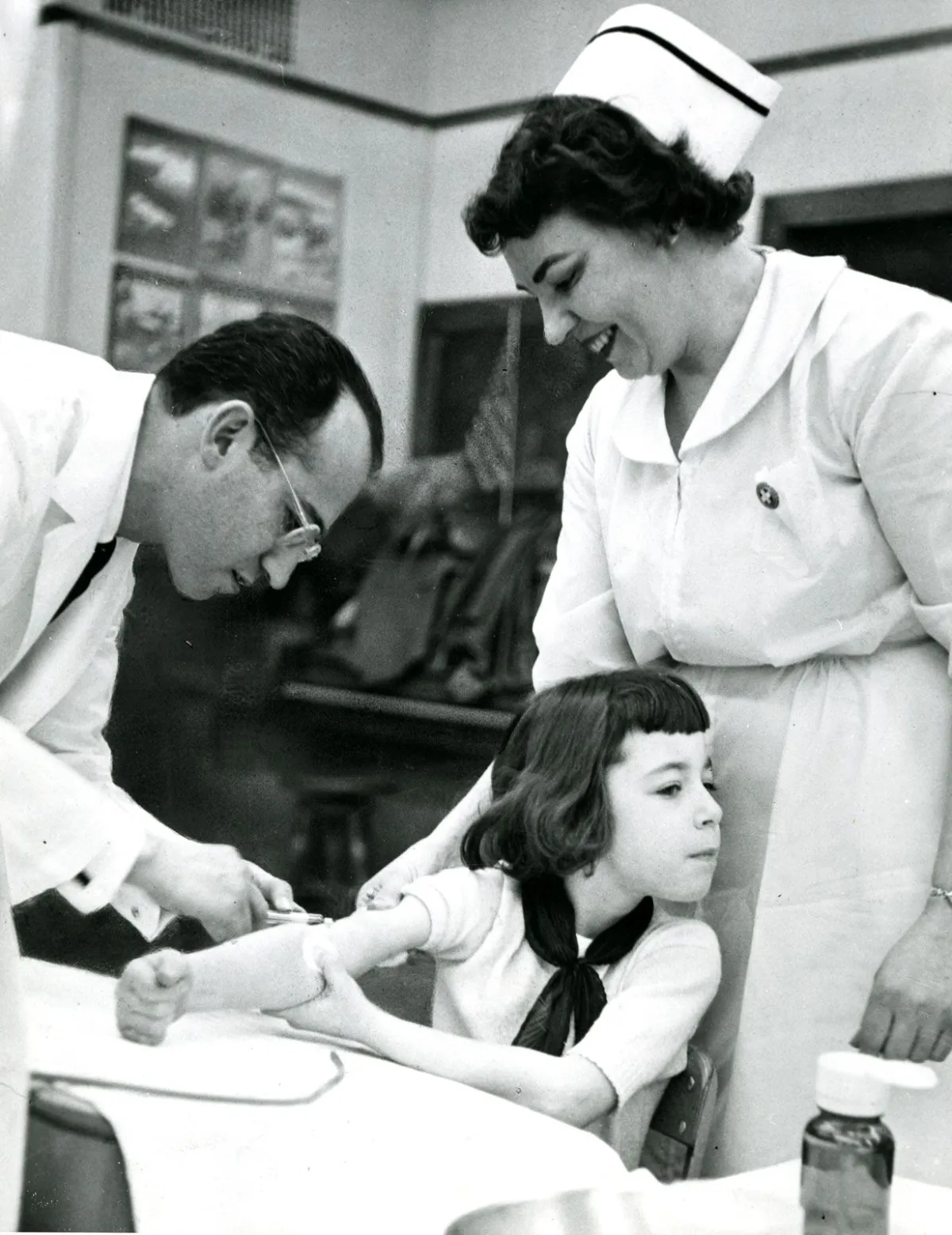 Photo: Dr. Jonas Salk, via cdn.britannica.com
When asked who owned the patent on his vaccine, Salk famously replied, "The people, I would say. There is no patent. Could you patent the sun?" This wasn't just noble rhetoric—it was the business model of a man who understood that some innovations are too important to be treated as property.
Salk's "empire" was built on giving away what could have made him one of the richest men in America. By refusing to profit from his discovery, he ensured that the vaccine could be manufactured and distributed as widely as possible, ultimately saving millions of lives and eradicating polio from most of the world.
4. Mary Kay Ash: The Divorcee Who Built Beauty on Belief
At 45, Mary Kay Ash was starting over. Her husband had left her, she'd been passed over for promotion by men she'd trained, and she was facing the prospect of rebuilding her life from scratch. What seemed like a series of devastating setbacks actually freed her to imagine something entirely new.
Ash's insight was that women didn't just want to buy cosmetics—they wanted to feel valued, appreciated, and capable of achieving their dreams. Mary Kay Cosmetics became famous for its pink Cadillacs and diamond jewelry, but the real product was confidence.
The company Ash built became a billion-dollar empire that provided economic independence to hundreds of thousands of women at a time when most careers were still closed to them. Her business model—treating salespeople as independent entrepreneurs rather than employees—revolutionized direct sales and created opportunities that traditional employment couldn't match.
5. Ray Kroc: The Salesman Who Lost Everything and Found McDonald's
Ray Kroc was 52 and recently divorced when he discovered a small burger operation in San Bernardino, California. He'd failed at multiple business ventures, lost his first marriage, and was working as a traveling milkshake machine salesman—hardly the resume of someone about to build the world's largest restaurant chain.
But Kroc's failures had taught him something valuable: systems matter more than products. The McDonald brothers had created an efficient system for delivering consistent food quickly, but they lacked the vision to scale it nationally. Kroc saw what they couldn't—that McDonald's wasn't really in the food business, it was in the real estate and franchising business.
Kroc's empire was built on the insight that success comes from perfecting simple systems and then replicating them endlessly. By the time he died, McDonald's was serving 22 million customers daily in more than 7,500 locations worldwide.
6. Dave Thomas: The Adopted Kid Who Built Wendy's on Family Values
Dave Thomas was adopted as an infant and spent his childhood being shuffled between relatives and foster homes. The instability of his early life could have broken him—instead, it gave him an unshakeable understanding of what family really means.
When Thomas founded Wendy's in 1969, he built the company around the family values he'd spent his childhood searching for. He named the restaurant after his daughter, featured his own family in commercials, and created a corporate culture that treated employees like family members rather than replaceable parts.
Thomas's empire was built on the radical idea that a fast-food restaurant could embody the warmth and care of a family kitchen. Wendy's became the third-largest hamburger chain in the world, but Thomas's real legacy was showing that business success and human values weren't mutually exclusive.
7. Colonel Sanders: The Failed Entrepreneur Who Found Success at 62
Harland Sanders had failed at dozens of businesses—from farming to insurance to running a gas station—when he finally perfected his fried chicken recipe at age 50. But even then, success eluded him. At 62, he was broke and living on Social Security when he decided to franchise his recipe.
 Photo: Colonel Sanders, via thumbs.dreamstime.com
Sanders's grief wasn't from a single devastating loss—it was from a lifetime of small failures that had taught him the difference between giving up and starting over. When he finally found success with Kentucky Fried Chicken, he understood that persistence, not talent, was the key to building something lasting.
His empire was built on the insight that it's never too late to begin again. Sanders sold KFC for $2 million in 1964, but the company he built became a global phenomenon that proved age is just a number when you're serving something people really want.
The Grief Advantage
What these seven Americans understood—consciously or not—is that grief creates a unique form of clarity. When everything you thought you knew about your life gets stripped away, you're forced to confront what actually matters. And sometimes, what actually matters turns out to be exactly what the world needs.
Their empires weren't built despite their losses—they were built because of them. Grief had burned away their fear of failure, their attachment to conventional wisdom, and their willingness to accept things as they were. What remained was pure purpose, and purpose turned out to be the most powerful business model of all.