The Accent That Built Empires: Seven Immigrants Who Turned Being Outsiders Into America's Greatest Business Advantage

The Outsider's Edge
In 1848, a 13-year-old Scottish boy named Andrew Carnegie arrived in New York Harbor speaking with such a thick brogue that most Americans couldn't understand him. Factory foremen mocked his accent. Potential employers dismissed him as another ignorant immigrant. By the time he died in 1919, he had built the largest steel empire in human history and given away what would be $75 billion in today's money.
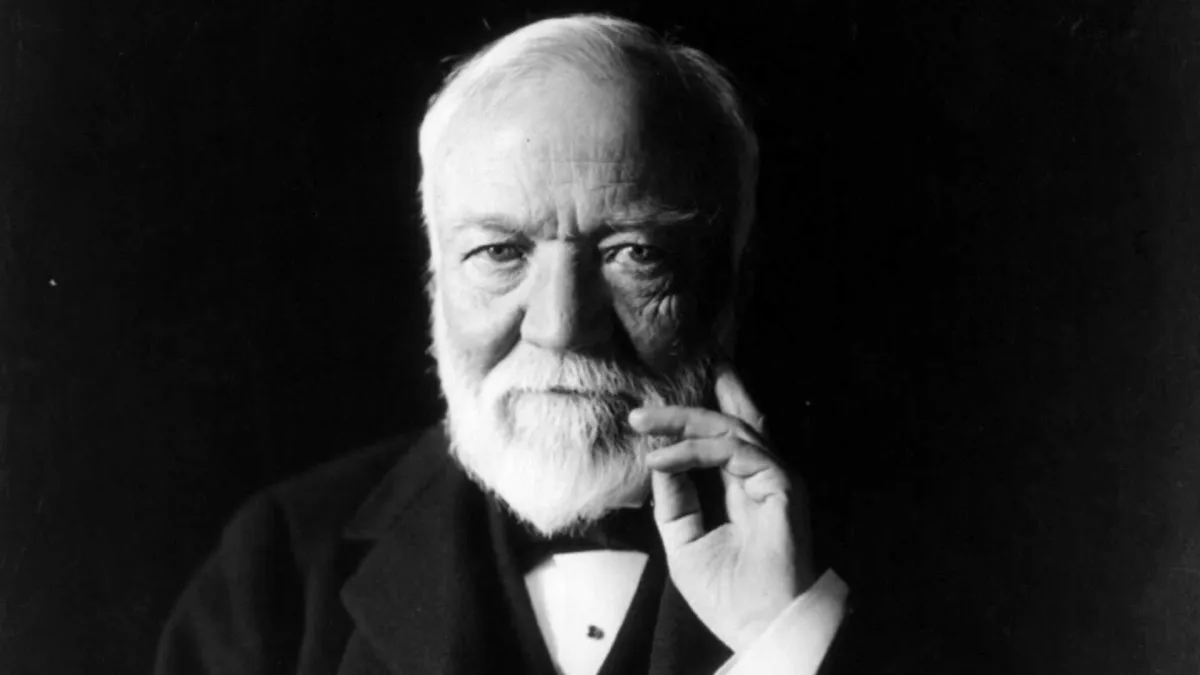 Photo: Andrew Carnegie, via res.cloudinary.com
Carnegie's story isn't unique—it's part of a pattern that has repeated throughout American history. Some of the nation's most transformative business leaders have been immigrants who arrived with heavy accents, foreign customs, and the kind of outsider perspective that native-born competitors couldn't replicate.
Here are seven immigrants who turned their status as perpetual outsiders into America's greatest entrepreneurial advantage.
Andrew Carnegie: The Scottish Steelmaker Who Outworked America
Arrived: 1848, age 13, from Scotland
Started with: A thick accent and a job in a cotton mill earning $1.20 per week
Carnegie's family fled Scotland during economic collapse, arriving in Pennsylvania with virtually nothing. While other immigrant kids were content to work factory jobs, Carnegie was obsessed with understanding how American business actually worked. He taught himself telegraphy, studied railroad operations, and absorbed financial principles that most native-born Americans took for granted.
His outsider status forced him to be more observant than his competitors. He noticed inefficiencies in steel production that established American manufacturers had stopped seeing. His Scottish work ethic—shaped by genuine poverty—drove him to optimize operations in ways that comfortable American industrialists never considered necessary.
By 1901, Carnegie Steel was producing more steel than all of Britain combined. His "outsider" perspective had allowed him to build something that American steel barons, despite their advantages, couldn't match.
Sergey Brin: The Soviet Refugee Who Organized the World's Information
Arrived: 1979, age 6, from Soviet Union
Started with: Parents fleeing antisemitism and a father driving a cab to support the family
Brin's family left Moscow when Soviet restrictions made it nearly impossible for Jews to pursue academic careers. His father, a brilliant mathematician, drove a taxi in Maryland while learning English. Young Sergey grew up watching his parents rebuild their lives from zero—a lesson in resilience that would prove crucial decades later.
At Stanford, Brin's immigrant background shaped his approach to the internet in ways his American classmates couldn't see. He understood information scarcity—he'd grown up in a country where access to knowledge was controlled and limited. When he and Larry Page began working on search algorithms, Brin brought an almost desperate appreciation for the democratic potential of unrestricted information access.
Google succeeded partly because Brin understood, in a visceral way that most American entrepreneurs couldn't, what it meant to live in a world where information was power. His outsider perspective helped him build tools for organizing information that native-born technologists, who had never experienced information restriction, might never have conceived.
Levi Strauss: The Bavarian Immigrant Who Clothed the American West
Arrived: 1847, age 18, from Bavaria
Started with: A peddler's pack and his brothers' dry goods business in New York
 Photo: Levi Strauss, via www.levistrauss.com
Strauss arrived during the California Gold Rush with a simple plan: sell supplies to miners. What he discovered was that prospectors kept complaining about pants that couldn't withstand the physical demands of mining work. American clothing manufacturers were focused on style and appearance—they didn't understand the brutal realities of frontier labor.
But Strauss, as an immigrant peddler, had spent years observing exactly what working people needed. He partnered with a tailor named Jacob Davis to create riveted work pants that could survive conditions that destroyed conventional clothing. His immigrant experience—understanding both scarcity and durability—led him to create the first blue jeans.
Levi Strauss & Co. became one of America's most enduring brands because an immigrant understood American working conditions better than American clothing makers did.
An Wang: The Chinese Engineer Who Computerized American Offices
Arrived: 1945, age 25, from China
Started with: A Harvard PhD and $600 in savings
Wang arrived just as World War II ended, speaking limited English and facing significant anti-Asian discrimination. American technology companies wouldn't hire Chinese engineers for senior positions, so Wang started his own company with almost no capital.
His outsider status forced him to focus on innovations that established American companies were ignoring. While IBM and other giants focused on massive mainframe computers, Wang saw the potential for smaller, specialized machines that could handle word processing for ordinary offices.
Wang Laboratories became a $3 billion company because an immigrant engineer understood office productivity challenges that American technology executives, focused on bigger and more complex systems, had overlooked.
Pierre Omidyar: The Iranian-Born Programmer Who Created eBay
Arrived: 1973, age 6, from France (born to Iranian parents)
Started with: Parents who were foreign-born academics adapting to American culture
Omidyar grew up watching his parents navigate American professional life as perpetual outsiders—brilliant, educated, but always slightly apart from native-born colleagues. This experience gave him an unusual sensitivity to how people who don't fit traditional categories might want to connect and trade with each other.
When he created AuctionWeb (later eBay) in 1995, Omidyar was essentially building a platform for people who, like his family, existed somewhat outside conventional commercial networks. His immigrant background helped him understand that there were millions of Americans who wanted to buy and sell things but didn't have access to traditional retail channels.
eBay succeeded because an immigrant programmer understood the commercial needs of other outsiders better than established American retailers did.
Elon Musk: The South African Entrepreneur Who Electrified American Transportation
Arrived: 1995, age 24, from South Africa via Canada
Started with: Student loans and a deep skepticism of conventional wisdom
Musk grew up in apartheid South Africa, watching a society built on fundamentally unsustainable assumptions. This experience gave him an unusual tolerance for challenging entrenched systems that most people accepted as permanent.
When he entered American business, Musk brought an outsider's perspective to industries—banking, space exploration, automotive—that had become comfortable with incremental improvement. His immigrant background meant he wasn't emotionally invested in preserving existing American business models.
Tesla and SpaceX succeeded partly because an immigrant entrepreneur was willing to question assumptions about electric vehicles and space travel that American executives, embedded in existing industry structures, found difficult to challenge.
Jerry Yang: The Taiwanese Student Who Mapped the Early Internet
Arrived: 1978, age 10, from Taiwan
Started with: Parents who spoke no English and a determination to master American academic culture
Yang's family arrived when he was in elementary school. His mother worked multiple jobs while Yang and his brother taught themselves English and American customs. This experience of constantly translating between cultures—linguistic, social, technological—became Yang's greatest business asset.
At Stanford, Yang co-created Yahoo! as essentially a directory for the early internet. His immigrant experience of needing to navigate unfamiliar systems gave him unique insight into what other people struggling with information overload actually needed.
Yahoo! became one of the internet's first major successes because an immigrant student understood the challenges of finding reliable information in chaotic environments better than native-born programmers did.
The Pattern Behind the Success
These seven entrepreneurs share more than immigrant backgrounds—they share a specific type of outsider advantage that transforms apparent disadvantages into competitive edges:
Fresh Eyes: They saw inefficiencies and opportunities that native-born competitors had stopped noticing.
Hunger: Their personal experience of starting over created work ethics that comfortable competitors couldn't match.
Adaptability: Years of navigating foreign systems made them exceptionally good at solving complex problems.
Different Networks: Their outsider status connected them to underserved communities that established businesses had overlooked.
Most importantly, their immigrant experience taught them that systems that seem permanent and unchangeable are often just waiting for someone with enough outsider perspective to reimagine them entirely.
In America, sometimes the greatest business advantage isn't knowing how things are supposed to work—it's being naive enough to think they could work better.