When Darkness Became Music: The Blind Genius Who Rewrote Jazz History
The Boy Who Heard Everything
In 1909, Art Tatum was born in Toledo, Ohio, with cataracts so severe that he was functionally blind from birth. By age four, a botched surgery had left him with only minimal vision in one eye. The doctors were clear: this child would never have a normal life, certainly never a career in music.
 Photo: Toledo, Ohio, via media.wtol.com
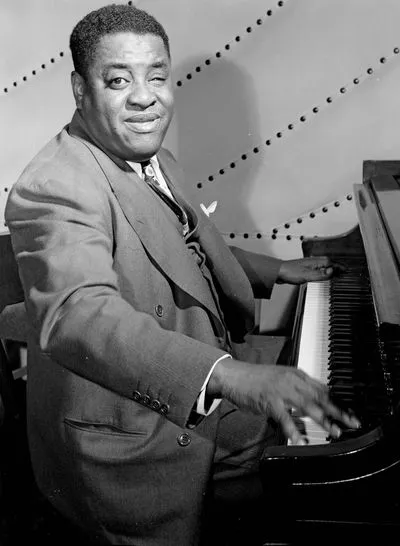 Photo: Art Tatum, via cdn.britannica.com
They couldn't have been more wrong.
While other kids played outside, young Art sat at his family's piano, teaching himself to play by ear. He couldn't read sheet music—not because he hadn't learned, but because he literally couldn't see it. What seemed like a devastating limitation became the foundation of something extraordinary.
When Memory Becomes Magic
Most pianists learn to read music before they learn to truly hear it. Tatum learned the opposite way around. Every note, every chord, every complex progression had to be memorized perfectly. There was no sheet music to fall back on, no written cue to guide him through a difficult passage.
This forced him to develop what musicians now call "photographic hearing"—the ability to remember and reproduce any piece of music after hearing it just once. But Tatum went further. He didn't just memorize songs; he deconstructed them in his mind, understanding their mathematical relationships, their emotional architecture, their hidden possibilities.
By his teens, he was playing local clubs in Toledo, stunning audiences with his speed and complexity. Jazz legends would drive from Detroit and Chicago just to hear this blind kid who played piano like he had four hands.
The Impossible Made Routine
When Tatum moved to New York in the 1930s, the established jazz scene didn't know what to do with him. His technique was so advanced that other pianists thought he was showing off. His improvisations were so complex that audiences sometimes couldn't follow them. Critics called his playing "too much"—too fast, too intricate, too overwhelming.
But Tatum wasn't showing off. He was doing what came naturally to someone who had learned music through pure sound rather than visual notation. Without the constraints of written music, he could hear possibilities that others missed. His blindness had trained him to perceive music in three dimensions—melody, harmony, and rhythm existing simultaneously in his mind like a complex architectural structure.
Breaking the Sound Barrier
The recording studios of the 1940s and 1950s became Tatum's laboratory. Between 1953 and 1956, he recorded over 120 songs for Norman Granz's Verve Records—more than any jazz artist had ever recorded in such a short period. These weren't just performances; they were masterclasses in musical possibility.
Each recording session revealed something new about what a piano could do. Tatum would take a simple standard like "Tea for Two" and transform it into something that sounded like three pianists playing at once. His left hand provided rhythm and bass lines while his right hand played melody and harmony simultaneously, creating textures that shouldn't have been possible on a single instrument.
The Teacher Who Never Taught
What made Tatum's influence so profound wasn't just his technique—it was his approach to limitation. Every pianist who came after him had to grapple with a simple question: if a blind man who couldn't read music could do this, what was stopping them?
Oscar Peterson, widely considered one of the greatest jazz pianists of all time, once said that hearing Tatum play made him want to quit piano entirely. "I realized I would never be able to play like that," Peterson recalled. "Then I realized that wasn't the point. The point was that he showed us what was possible."
The Revolution Hidden in Plain Sight
Tatum's story reveals something crucial about how innovation actually works. The greatest breakthroughs often come not from people with the most advantages, but from those forced to find entirely new approaches to old problems.
Because he couldn't rely on sheet music, Tatum had to develop an intuitive understanding of musical structure that went far deeper than reading notes on a page. Because he couldn't see the keyboard, he had to memorize not just songs but the physical geography of musical expression. Because he couldn't follow visual cues from other musicians, he had to develop an internal sense of timing that was absolutely precise.
Every limitation became a strength. Every closed door forced him to find a better way in.
The Sound of Possibility
By the time Art Tatum died in 1956, he had fundamentally changed what people thought a piano could do. His recordings remain technically astonishing even today, nearly 70 years later. Modern pianists study his work not just for entertainment, but as a masterclass in musical possibility.
But perhaps the most remarkable thing about Tatum's legacy isn't his technique—it's his proof that the human capacity for adaptation and innovation is far greater than we imagine. In a world that told him his blindness made professional music impossible, he created a new language for the instrument itself.
Sometimes the best way to see clearly is to close your eyes and listen.