The Streetcar Chef: How a Two-Time College Dropout Accidentally Built the Blueprint for Every Fast Food Chain in America
The Dropout's Dilemma
Walter Anderson was 24 and running out of second chances. He'd already washed out of two different colleges—first Kansas State, then Marquette—and was back in Wichita, Kansas, working as a short-order cook in a converted streetcar diner. His family had given up on him. His former classmates were starting careers. And Walter was flipping burgers for 15 cents an hour, wondering where exactly his life had gone wrong.
 Photo: Walter Anderson, via i.pinimg.com
It was 1916, and America was a nation of immigrants and farm kids flooding into cities, looking for quick, cheap meals that reminded them of home. Most restaurants served either expensive sit-down dinners or questionable street food. The middle ground—fast, clean, affordable—barely existed.
Walter noticed something his more educated competitors missed: people didn't just want food. They wanted predictability. They wanted to know that a hamburger in Wichita would taste exactly like a hamburger in Kansas City. But every restaurant was essentially a one-off operation, with cooks making individual decisions about every single order.
The Streetcar Laboratory
Working in that cramped streetcar kitchen, Walter started experimenting with something no one had tried before: standardization. Not just of ingredients, but of every single process. He timed how long it took to cook a burger to perfection. He measured exactly how much onion went on each patty. He figured out the precise temperature needed to steam buns consistently.
His boss thought he was crazy. Customers didn't care about consistency, he argued. They wanted variety, personality, the human touch. But Walter had a different theory: people were tired of gambling every time they ordered food. They wanted to know what they were getting.
He was also solving a problem most restaurateurs didn't even recognize. Speed wasn't just about customer convenience—it was about economics. The faster you could serve food without sacrificing quality, the more customers you could handle, and the more money you could make per square foot of space.
The Five-Cent Revolution
In 1921, Walter borrowed $700 and opened the first White Castle in Wichita. The building itself was revolutionary—a tiny white fortress with turrets, designed to look clean and castle-like in an era when most burger joints looked like converted shacks. But the real innovation was invisible: the kitchen system Walter had been perfecting for five years.
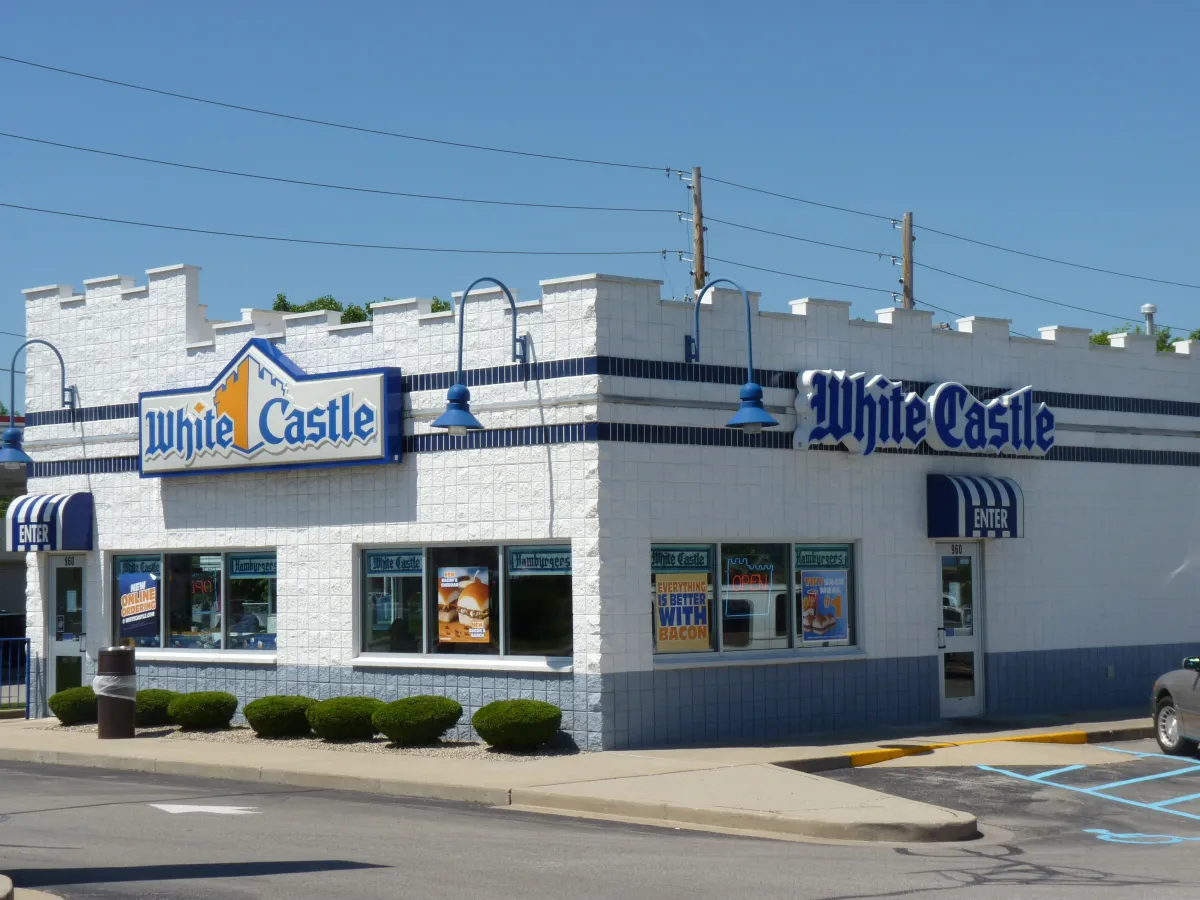 Photo: White Castle, via i.pinimg.com
Every burger was exactly the same size. Every cooking time was identical. Every employee followed the same procedures in the same order. Walter had essentially turned burger-making into a manufacturing process, but one that still produced something people actually wanted to eat.
The results were immediate and dramatic. White Castle could serve customers in minutes instead of the typical 15-20 minutes of sit-down restaurants. They could sell burgers for a nickel—less than half what competitors charged—and still make money because of their volume and efficiency.
The Accidental Empire
Within three years, Walter was opening White Castles across the Midwest. But he was still thinking like a dropout cook, not a business mogul. He didn't franchise—he owned every location outright. He didn't advertise—he let word of mouth drive growth. He didn't even call it "fast food"—that term wouldn't be invented for another 30 years.
What Walter had created, almost by accident, was the template for an entirely new industry. His innovations—standardized cooking procedures, identical portion sizes, assembly-line food preparation, emphasis on speed and cleanliness—would eventually be adopted by every major restaurant chain in America.
But in the 1920s, most people saw White Castle as a novelty, not a revolution. Business schools weren't studying Walter's methods because business schools barely acknowledged that restaurants were legitimate businesses worth studying.
The Student Becomes the Teacher
By the 1940s, other entrepreneurs were starting to notice what Walter had built. A traveling milkshake machine salesman named Ray Kroc visited White Castles during his routes, studying their operations with the intensity of a graduate student. Brothers named Mac and Dick McDonald drove from California to the Midwest specifically to see how White Castle kitchens worked.
These future fast-food titans weren't trying to copy White Castle's burgers—they were trying to understand Walter's systems. How did he maintain consistency across dozens of locations? How did he train employees to work so efficiently? How did he balance speed with quality?
Walter, still thinking like a cook rather than a business theorist, was happy to share what he'd learned. He didn't see these visitors as future competitors. He saw them as fellow restaurant people trying to solve the same problems he'd been working on for decades.
The Blueprint That Built an Industry
Today, McDonald's serves 69 million customers daily using kitchen systems that are direct descendants of what Walter Anderson invented in that Wichita streetcar. Burger King, Wendy's, Taco Bell, KFC—every major fast-food chain uses some version of the standardization principles Walter developed as a failed college student with nothing to lose.
The global fast-food industry is now worth over $650 billion annually. It employs millions of people worldwide and has fundamentally changed how human beings eat. And it all traces back to a two-time dropout who was too inexperienced to know that what he was attempting was supposed to be impossible.
The Dropout's Advantage
Walter Anderson's story reveals something crucial about innovation: sometimes the biggest breakthroughs come from people who don't know enough to be intimidated by conventional wisdom. His lack of formal business education wasn't a liability—it was his secret weapon.
Restaurant industry veterans "knew" that customers wanted personalized service and handcrafted food. They "knew" that standardization would make food tasteless and mechanical. They "knew" that fast service meant low quality.
Walter didn't know any of that. He just knew that he was tired of making the same burger slightly differently every time, and that customers seemed to appreciate knowing what they were going to get.
By the time he died in 1963, Walter had watched his little hamburger innovations grow into a fundamental part of American culture. But he never stopped thinking of himself as just a cook who had stumbled onto a better way of doing things.
Sometimes the most transformative ideas come from people who are too busy solving immediate problems to worry about whether they're changing the world.