The Stuttering Salesman Who Became the Voice That Sold America on Itself
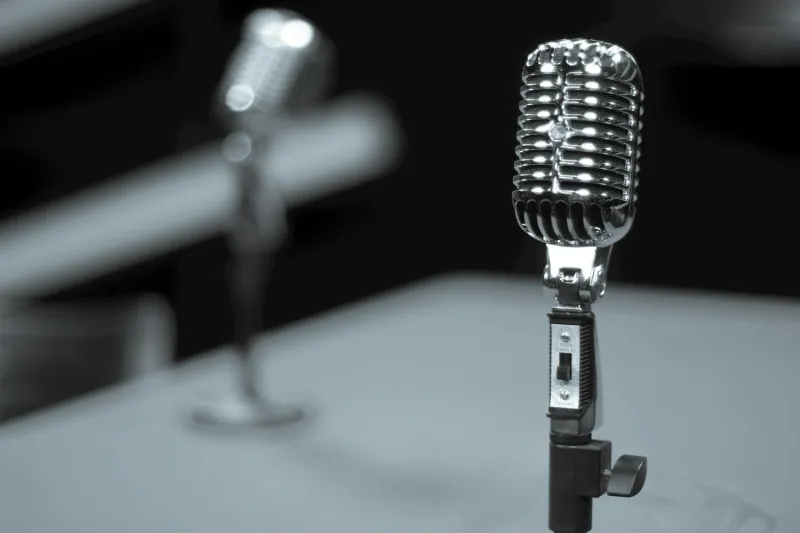
The Boy Who Couldn't Say His Own Name
In 1952, a skinny kid named David walked into his high school speech class in Cleveland, Ohio, and tried to introduce himself. What came out instead was a painful stutter that turned his name into a series of broken syllables. The teacher stopped him mid-sentence.
 Photo: Cleveland, Ohio, via www.shutterstock.com
"Son, you need to find a different elective. Public speaking clearly isn't for you."
David Ogilvy would spend the next decade proving that teacher spectacularly wrong — not by overcoming his stutter, but by using it as the secret weapon that made him the most influential voice in American advertising.
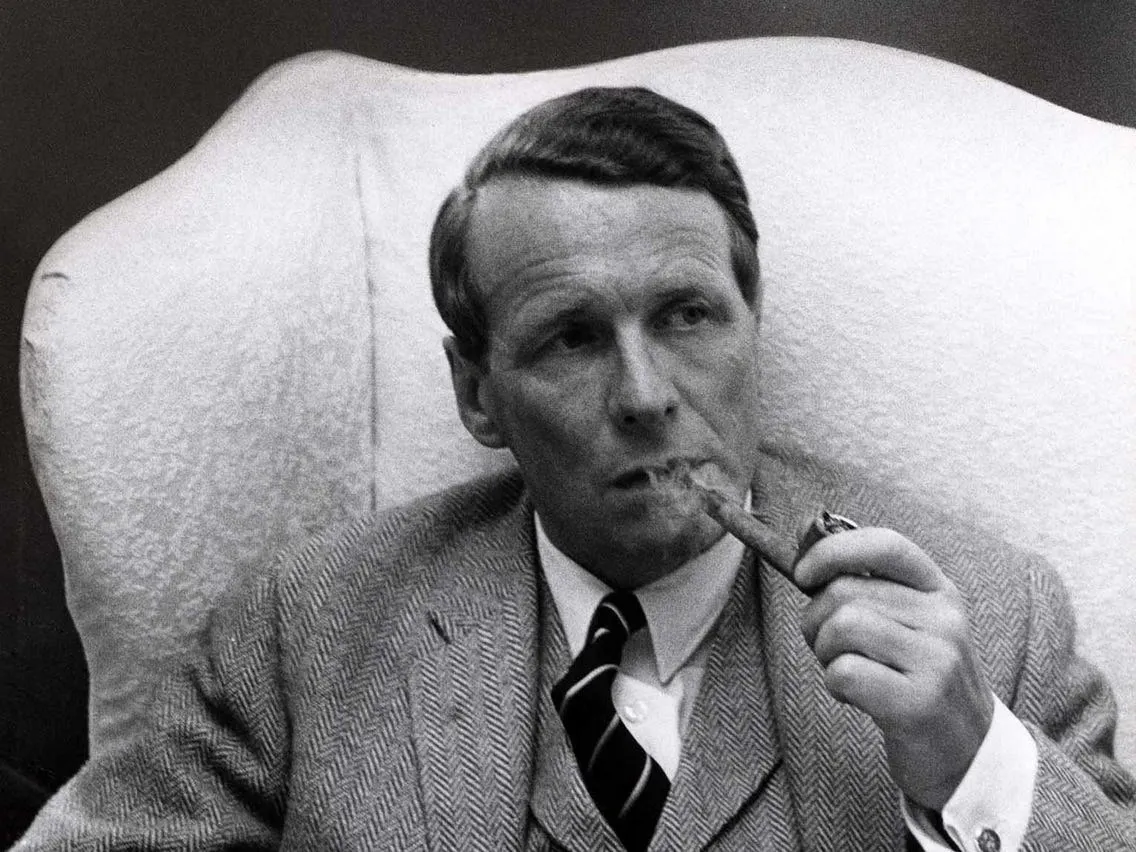 Photo: David Ogilvy, via nuflux.net
When Your Weakness Becomes Your Laboratory
Most people who stutter learn to avoid speaking. Ogilvy did the opposite. Humiliated by his speech impediment but fascinated by the power of words, he began studying language like a scientist studies specimens. He dissected sentences, analyzed rhythm, and memorized the works of Shakespeare not for culture, but for survival.
Every word had to be planned. Every phrase required strategy. While his classmates spoke carelessly, Ogilvy was forced to architect his thoughts with surgical precision. He couldn't rely on charm or quick wit — he had to make every syllable count.
This wasn't therapy. This was boot camp for a mind that would later craft some of the most memorable advertising copy in American history.
The Salesman Who Studied Silence
After high school, Ogilvy took a job selling encyclopedias door-to-door. It seemed like career suicide for someone who struggled to string sentences together. But that's exactly why it worked.
Unable to fast-talk his way through presentations, Ogilvy learned to listen. He studied his customers' faces, their hesitations, their unspoken objections. He discovered that the most powerful tool in sales wasn't talking — it was knowing exactly when to stop talking.
He became obsessed with the architecture of persuasion. How do you move someone from skepticism to trust? How do you plant an idea so naturally that the customer thinks they discovered it themselves? These weren't just sales techniques — they were the building blocks of advertising psychology.
Within two years, Ogilvy was the company's top salesman. Not despite his stutter, but because of what it had taught him.
The Agency That Almost Said No
In 1948, Ogilvy walked into a Madison Avenue advertising agency with a portfolio of ideas and a speech pattern that still betrayed his childhood struggles. The executives were polite but skeptical. Advertising was about smooth talkers and silver tongues. This awkward guy from Ohio didn't fit the mold.
They gave him a chance anyway — mostly because his ideas were undeniably brilliant.
Ogilvy's first major campaign was for Rolls-Royce. Instead of flashy slogans or celebrity endorsements, he wrote a headline that became advertising legend: "At 60 miles an hour the loudest noise in this new Rolls-Royce comes from the electric clock."
It was precise. It was specific. It painted a picture with surgical accuracy. It was everything Ogilvy had learned from a lifetime of choosing words carefully because he couldn't afford to waste them.
The Voice That Sold Everything
Over the next two decades, Ogilvy revolutionized American advertising. His campaigns for Dove soap, Schweppes tonic water, and dozens of other brands didn't just sell products — they created cultural moments.
But his greatest achievement wasn't any single ad. It was proving that the most powerful voice in advertising didn't need to be the smoothest. It needed to be the most thoughtful.
Ogilvy's stutter had forced him to become a master craftsman of language. While his competitors relied on instinct and charm, he built a systematic understanding of how words work on the human mind. His agency, Ogilvy & Mather, became one of the most successful in the world precisely because its founder understood something his smooth-talking competitors didn't: precision beats personality every time.
The Teacher Who Got It Wrong
In 1962, Ogilvy returned to his old high school in Cleveland to give the graduation speech. The same teacher who had kicked him out of speech class was still there, now nearing retirement.
After the ceremony, she approached him with tears in her eyes.
"I was wrong about you," she said. "I thought your stutter would hold you back."
Ogilvy smiled. "It didn't hold me back," he replied. "It made me better."
The Constraint That Built a Genius
David Ogilvy's story isn't about overcoming disability — it's about transforming constraint into competitive advantage. His stutter didn't disappear when he became successful. It evolved into something more powerful: an almost supernatural sensitivity to the rhythm and impact of words.
In a business built on talking, the man who struggled to speak became the voice that sold America on itself. His campaigns didn't just move products off shelves — they shaped how Americans saw luxury, quality, and aspiration.
The boy who couldn't say his own name grew up to write the words that an entire nation would repeat. Sometimes the thing that seems designed to break you is actually building you into exactly who you need to become.