From Financial Ruins to Fortune: Seven Americans Who Found Gold in Going Broke

When Zero Becomes Your Starting Point
Bankruptcy feels like the end of everything. Credit destroyed, assets liquidated, dreams reduced to legal paperwork. Most people who file for bankruptcy spend years trying to recover what they lost.
But for some Americans, bankruptcy became something else entirely: a brutal education that stripped away everything except what actually mattered. Here are seven who turned financial catastrophe into the foundation of extraordinary success.
1. Walt Disney: When Fantasy Became Reality
In 1923, Walt Disney was 22 years old and completely broke. His first animation company, Laugh-O-Gram Studio, had collapsed after his distributor cheated him out of payments. Disney filed for bankruptcy with $40 in his pocket and a suitcase full of drawing supplies.
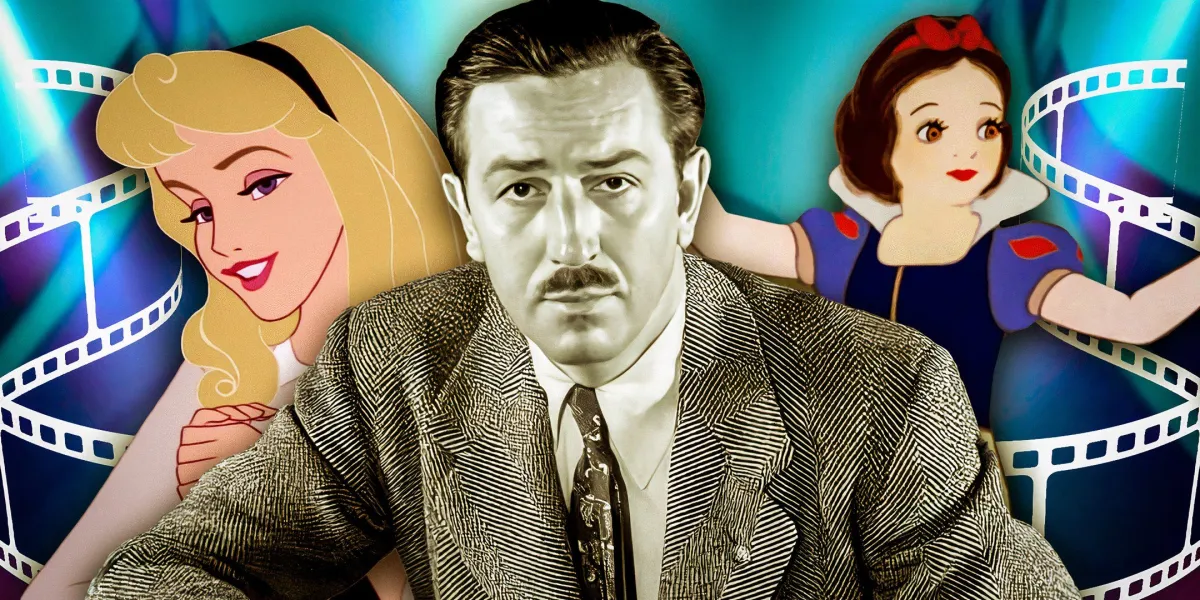 Photo: Walt Disney, via static1.srcdn.com
The bankruptcy forced Disney to examine what had gone wrong. He realized that creative talent meant nothing without business sense. When he started Disney Brothers Studio with his brother Roy, he insisted on maintaining control over distribution and character rights—lessons learned from his first failure.
That obsession with control, born from bankruptcy, would later enable Disney to retain ownership of Mickey Mouse when other studios tried to buy the character. The mouse that built an empire existed because Walt Disney had learned the hard way that talent without business acumen was worthless.
2. Henry Ford: Assembly Line Thinking
Before Ford Motor Company, Henry Ford failed twice. His first venture, the Detroit Automobile Company, folded in 1901 when investors pulled funding. His second attempt, the Henry Ford Company, ended when Ford clashed with financiers and was forced out—the company was renamed Cadillac without him.
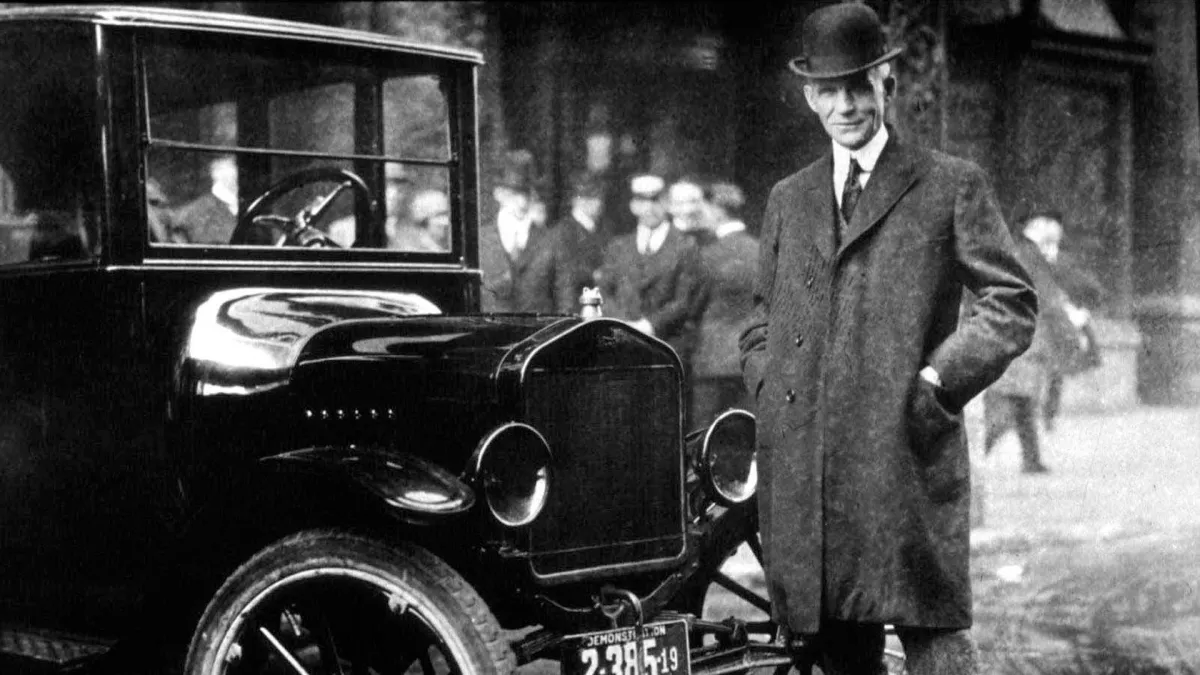 Photo: Henry Ford, via cdn.britannica.com
Two bankruptcies taught Ford that he needed complete control over his manufacturing process. When he started Ford Motor Company in 1903, he revolutionized not just car production but the entire concept of industrial efficiency. The assembly line wasn't just an innovation—it was Ford's response to the chaos and inefficiency that had destroyed his previous companies.
His obsession with streamlined production, born from failure, made the Model T the first affordable car for average Americans and turned Ford into one of the richest men in history.
3. Milton Hershey: Sweet Success After Bitter Failure
Milton Hershey's first three candy companies failed spectacularly. By 1886, he was bankrupt and working for his former competitor. Most 29-year-olds would have found a different career.
But Hershey's failures had taught him something crucial: Americans wanted affordable, mass-produced chocolate, not expensive European-style confections. His previous companies had failed because he was trying to compete in the wrong market.
When he started the Lancaster Caramel Company, Hershey focused on volume and affordability rather than luxury. The success of that company gave him the capital to experiment with chocolate manufacturing—work that eventually created the Hershey Company and made chocolate accessible to ordinary Americans for the first time.
4. Dave Ramsey: From Broke to Financial Guru
By age 26, Dave Ramsey had built a $4 million real estate portfolio. Two years later, he was bankrupt. Overleveraged properties and a banking crisis had destroyed everything he had built.
The bankruptcy forced Ramsey to examine his relationship with money and debt. He realized that his previous success had been built on dangerous assumptions about leverage and risk. When he started rebuilding, he adopted a radically different philosophy: no debt, ever.
That philosophy, learned through bankruptcy, became the foundation of Financial Peace University and a media empire that has helped millions of Americans get out of debt. Ramsey's bankruptcy wasn't just a setback—it was the experience that gave him credibility and insight that no business school could provide.
5. Colonel Sanders: Finger-Lickin' Late Bloomer
Harland Sanders was 62 when his restaurant business collapsed. A new interstate highway had bypassed his Kentucky restaurant, destroying his customer base. He auctioned off his equipment and found himself living on Social Security checks.
 Photo: Colonel Sanders, via www.simplylifetips.com
Most people would have accepted retirement. Sanders used his bankruptcy as motivation to perfect his chicken recipe and develop a franchise system. He spent two years driving around the country, sleeping in his car, trying to convince restaurant owners to serve his chicken.
The desperation that came from losing everything at 62 gave Sanders the persistence to knock on 1,009 doors before finding his first franchise partner. KFC became a global empire because a broke senior citizen refused to accept that his story was over.
6. Donald Trump: The Art of the Comeback
In 1991, Trump's casino and real estate empire was $900 million in debt. His personal guarantees meant he was liable for much of it. Banks forced him to live on a $450,000 monthly allowance while they restructured his companies.
The near-bankruptcy taught Trump lessons about debt management and deal structure that his previous success had never required him to learn. When he rebuilt his empire, he was more careful about personal guarantees and more strategic about leveraging other people's money.
The comeback that followed wasn't just about recovering lost wealth—it was about applying hard-won knowledge about risk and negotiation that only comes from nearly losing everything.
7. Larry King: From Broke Broadcaster to Media Icon
In 1971, Larry King was arrested for grand larceny (charges later dropped) and found himself unemployed and $352,000 in debt. His radio career seemed over before it had really begun.
The financial crisis forced King to rebuild his career from scratch, starting with small-market radio in Louisiana. The experience taught him humility and interviewing skills that his earlier success had never required. He learned to connect with ordinary people because he had been forced to start over as one.
When King finally reached national prominence with Larry King Live, his ability to relate to guests and audiences came directly from his experience of losing everything and clawing his way back. His bankruptcy had been the best media training he never paid for.
The Education Money Can't Buy
What connects these seven stories isn't just resilience—it's the specific insights that only come from total financial failure. Bankruptcy strips away everything except core competencies and fundamental understanding. It forces people to examine what actually works versus what merely appears successful.
For Disney, bankruptcy revealed the importance of business control. For Ford, it highlighted the need for manufacturing efficiency. For Hershey, it clarified his real market. For Ramsey, it exposed the dangers of debt. For Sanders, it provided the desperation needed for persistence. For Trump, it taught sophisticated debt management. For King, it developed the common touch that made him America's interviewer.
Each of these entrepreneurs built their greatest successes on lessons that could only be learned through failure. Their bankruptcies weren't obstacles to overcome—they were the educational experiences that made their later achievements possible.
The Zero Advantage
Most business schools teach case studies about successful companies. But these seven stories suggest that the most valuable education might come from studying failure—specifically, your own.
Bankruptcy forces a kind of honesty that success never requires. When everything is gone, you discover what actually matters. When credit is destroyed, you learn to build with cash flow instead of leverage. When reputation is ruined, you develop the persistence that only comes from having nothing left to lose.
Sometimes the best thing that can happen to an entrepreneur is to lose everything early enough to rebuild with wisdom instead of just ambition. Sometimes bankruptcy isn't the end of your business education—it's graduation day.