From Cell Block to Gallery Wall: How Prison Became One Artist's Greatest Teacher
The Awakening
Marcus Williams was twenty-three when the metal door slammed shut behind him. Eight to twelve years for armed robbery. No high school diploma. No job skills. No prospects beyond the concrete walls of Eastern State Correctional Institution in Pennsylvania.
 Photo: Marcus Williams, via f4.bcbits.com
What he found there would transform not just his life, but challenge everything we think we know about where great art comes from.
Three years into his sentence, Williams signed up for the prison's art therapy program almost by accident. "I was bored out of my mind," he recalls. "Figured it might be better than sitting in my cell counting ceiling tiles." He'd never held a paintbrush before that first Tuesday afternoon in 2008.
Within weeks, something clicked. The same restless energy that had driven him to poor choices on the outside found a different outlet. "In prison, you have nothing but time," Williams explains. "No distractions, no excuses. Just you and whatever you're working on."
The Unlikely Mentorship
Williams' work caught the attention of Sarah Chen, a gallery owner in Philadelphia who volunteered with prison art programs. She saw something raw and powerful in his early paintings—urban landscapes that seemed to pulse with life despite being painted from memory in a place designed to contain it.
Chen began a correspondence with Williams that would span five years. She sent him art books, critiqued his work through letters, and connected him with working artists who became his mentors from the outside. "Marcus had this incredible hunger to learn," Chen remembers. "He was consuming art history, technique, everything I could send him."
The irony wasn't lost on Williams. "Here I was, locked up, but I felt freer than I'd ever been in my life. Prison gave me structure I'd never had. Wake up at six, paint for four hours, study for two hours, paint some more. I was finally disciplined about something."
Breaking Through Walls
By his sixth year inside, Williams was producing work that stunned visitors to the prison's annual art show. His paintings captured the complexity of urban America—the beauty and struggle existing side by side—with a perspective that formal art training rarely produces.
"There's something about creating art when you're stripped of everything else," says Dr. Patricia Hernandez, who studies art therapy in correctional settings. "No career pressures, no market considerations, no external validation. Just pure expression."
Williams' breakthrough came in 2014, two years before his release. Chen submitted three of his paintings to a group show at the Philadelphia Museum of Art focused on emerging American voices. All three were accepted.
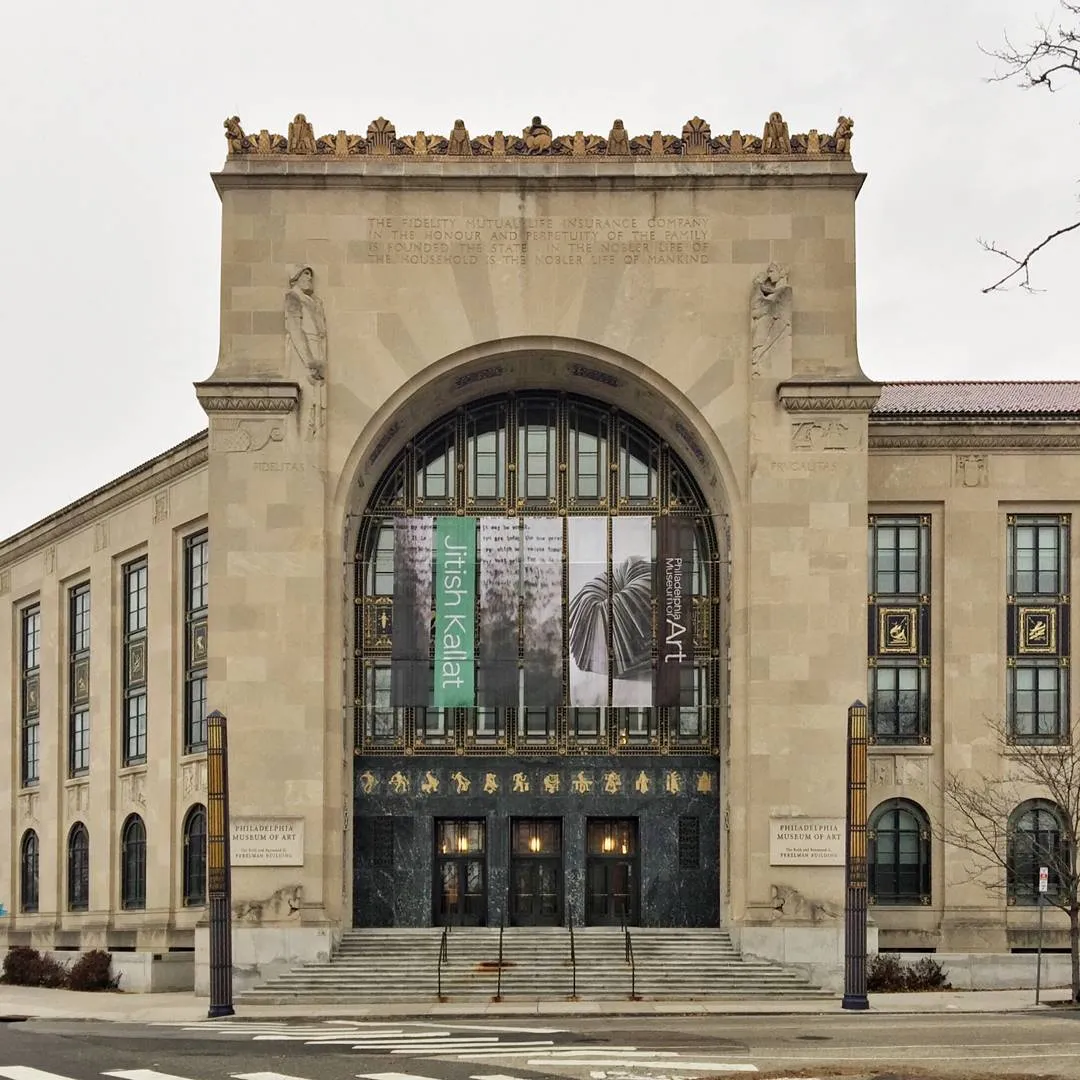 Photo: Philadelphia Museum of Art, via photos.wikimapia.org
The art world took notice. Here was work that felt authentic in a way that gallery circuits often struggle to find—art born from real experience, painted with the kind of focus that only comes from having nowhere else to go.
Life on the Outside
Williams was released in 2016 to a world he barely recognized. Social media, smartphones, a changed Philadelphia landscape. But his art had given him something invaluable: purpose and a way to make a living.
His first solo show sold out in three days. The New York Times called his work "a powerful voice from America's margins." Major collectors began acquiring his pieces. Williams had found his calling in the last place anyone would look for it.
"People ask me if I'm grateful for prison," Williams says from his studio in North Philadelphia, a converted warehouse where he now mentors other formerly incarcerated artists. "That's complicated. I'm grateful for what I found there, but I wish I could have found it another way."
The Paradox of Constraint
Williams' story illuminates something profound about creativity and human potential. Sometimes our greatest limitations become our greatest teachers. The structure of prison—the routine, the isolation from external pressures, the abundance of time—created conditions where his artistic vision could develop without interference.
"In the art world, everyone's trying to be the next big thing," Williams observes. "In prison, I just painted what I saw, what I felt. I wasn't performing for anyone. That honesty, that's what people respond to."
Today, Williams' paintings hang in galleries from Los Angeles to Miami. He's been featured in Art in America and has a waiting list of collectors eager for his next piece. He's also established a foundation that brings art supplies and instruction to prison programs across the country.
Beyond the Canvas
Williams' transformation speaks to larger questions about second chances and hidden potential. How many voices go unheard because we've written people off? How many talents remain buried because we can't see past someone's worst moment?
"I meet kids all the time who remind me of myself at twenty-three," Williams says. "Angry, directionless, making bad choices. I try to show them that it's never too late to find what you're meant to do. Sometimes the path to your purpose goes through places you never expected."
His latest series, "Walls and Windows," explores themes of confinement and freedom through abstract landscapes that feel both claustrophobic and expansive. The paintings sell for five figures now, but Williams says the money isn't what drives him.
"Art saved my life," he says simply. "Not just from crime, but from giving up on myself. Prison taught me that sometimes you have to lose everything to find what really matters."
In a culture obsessed with overnight success and prodigies, Marcus Williams' story is a reminder that greatness often emerges from the most unlikely circumstances. His cell became his classroom, his sentence became his education, and his setback became the foundation for a remarkable second act.