Five Empires That Started in a Garage — and the Other Lives Their Founders Almost Lived
Five Empires That Started in a Garage — and the Other Lives Their Founders Almost Lived
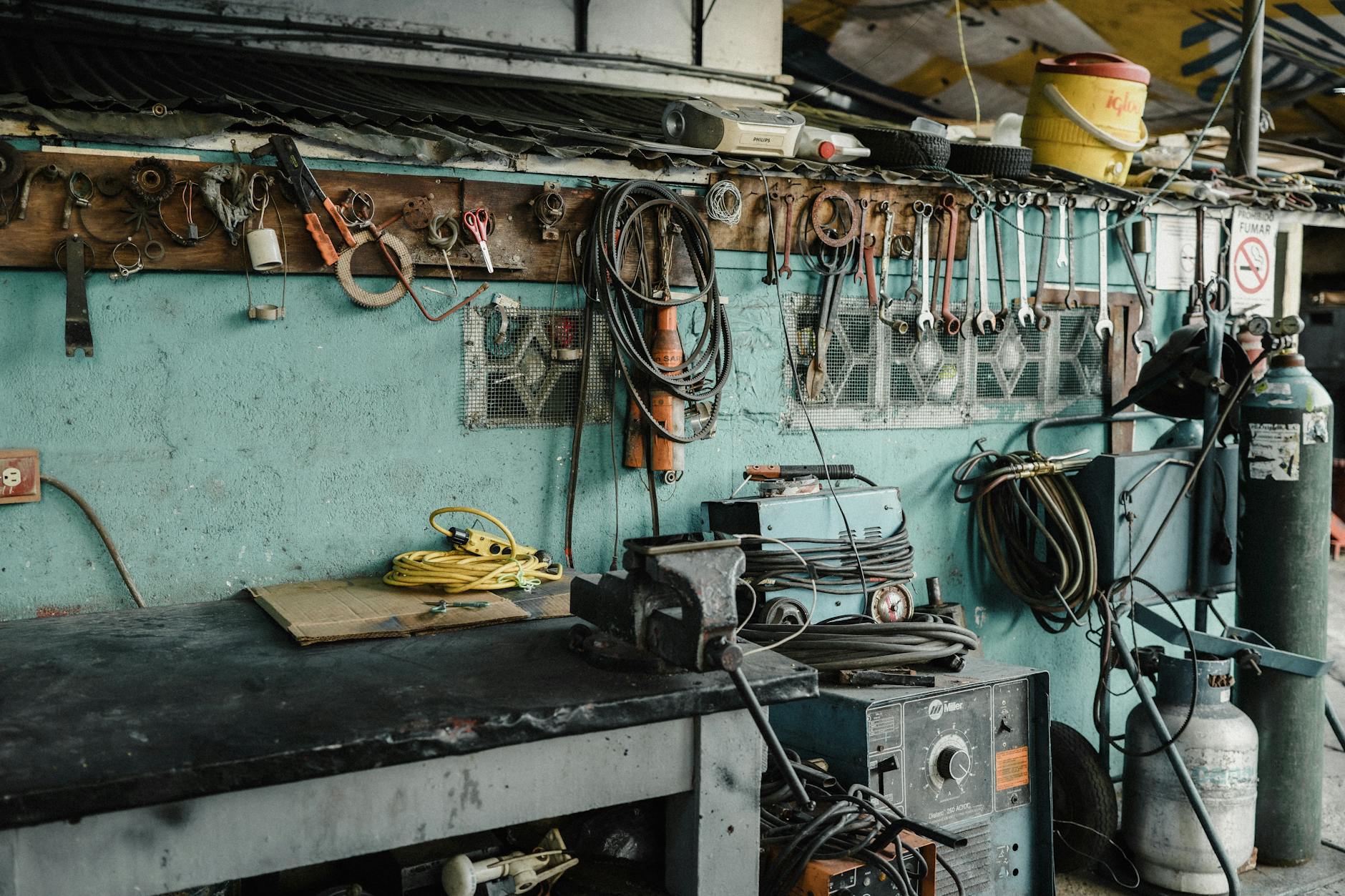
There's something almost mythological about the garage in American business culture. The concrete floor, the oil stain, the folding table pushed against a wall of rusted tools — it's become the unofficial symbol of startup ambition, shorthand for the idea that the biggest ideas don't need much space to get going.
But here's the thing about garage origin stories that usually gets glossed over: the founders who changed everything were often one decision, one job offer, or one moment of inertia away from never building anything at all.
These are five of the most iconic garage-born companies in American history — and the alternate timelines their founders almost chose instead.
1. Apple Computer — The Engineer Who Almost Stayed an Engineer
The garage: Los Altos, California, 1976. Steve Jobs's childhood home.
Steve Wozniak was, by his own description, perfectly happy. He had a good job at Hewlett-Packard, he was building computers as a hobby, and he had exactly zero interest in starting a company. When Jobs pushed the idea of selling the circuit board that would become the Apple I, Wozniak's first instinct was to offer the design to HP — his employer — for free.
HP passed. Five times, in fact, across multiple levels of management. Wozniak had fulfilled his professional obligation, as he saw it. He could have walked away clean.
Jobs kept pushing. Wozniak eventually agreed — partly out of friendship, partly because Jobs had a way of making the improbable sound inevitable.
Without that persistence, Wozniak likely spends his career as a celebrated engineer inside a large corporation, HP probably gets a modest product upgrade, and the personal computing revolution looks very different. The garage doesn't become a legend. It stays a garage.
The near-miss: Wozniak, the accidental entrepreneur, almost stayed an employee forever.
2. Amazon — The Hedge Fund Guy Who Pulled Over on the Highway
The garage: Bellevue, Washington, 1994. Jeff Bezos and his wife MacKenzie built the first Amazon order fulfillment station on a wooden door laid across sawhorses.
In 1994, Jeff Bezos was 30 years old and doing extremely well as a senior vice president at D.E. Shaw, one of New York's most prestigious quantitative hedge funds. The internet was growing at 2,300 percent annually. He saw the opportunity. He also had a very comfortable life and a boss who told him, reasonably enough, that leaving a great job to sell books online sounded like a questionable idea.
Bezos took what he later called a "regret minimization" approach: he imagined himself at 80, looking back. Would he regret not trying? Yes. Would he regret leaving a Wall Street job to chase a long shot? Not really.
He drove cross-country with MacKenzie, writing the Amazon business plan in the passenger seat while she drove. He incorporated the company before they'd even arrived in Seattle.
The alternative wasn't obscurity — Bezos was clearly going somewhere. But the specific shape of what he built, the particular scrappiness that came from starting with almost nothing in a suburban garage, almost never happened.
The near-miss: One of the world's most valuable companies almost stayed a Wall Street career.
3. Harley-Davidson — The Backyard Project That Wasn't Supposed to Be a Business
The garage: Milwaukee, Wisconsin, 1901. A 10-by-15-foot shed in the Davidson family's backyard.
William Harley and Arthur Davidson weren't trying to build an American icon. They were trying to make it easier to go fishing.
Harley, then 21, wanted a motorized bicycle that could get him to his favorite fishing spots without wearing him out. Davidson wanted the same thing. They built their first engine out of a tomato can and a discarded carburetor. It barely worked.
Harley, for his part, was a draftsman by training and inclination. He would go on to earn an engineering degree from the University of Wisconsin while the company was already up and running — attending night school while managing a growing business during the day. His path, absent Davidson's enthusiasm and the fishing trip problem, likely led to a solid career in mechanical drafting and a very different kind of legacy.
The motorcycle that emerged from that backyard shed was never meant to be a product. It was a solution to a personal inconvenience. The fact that other people wanted one too was almost incidental.
The near-miss: The American motorcycle was almost just a really good fishing trip.
4. The Walt Disney Company — The Artist Who Almost Quit After Going Bankrupt
The garage: Not quite a garage — but close. Disney's first California studio, in 1923, was his uncle's one-car garage in Hollywood.
By the time Walt Disney arrived in Los Angeles at 21, he had already failed once. His first animation company, Laugh-O-Gram Studios in Kansas City, had gone bankrupt. He had $40 in his pocket when he stepped off the train. His plan — vague, optimistic, characteristically undeterred — was to become a live-action film director.
Animation, in his mind, was the thing he'd already tried. He wasn't going back to it.
He spent weeks trying to get meetings with film studios. Nobody was interested. His brother Roy, recovering from tuberculosis in a nearby veterans' hospital, encouraged him to try the animation business again — just once more, just to see.
Walt wrote to a New York distributor, landed a contract for a series of short films, and set up shop in his uncle's garage with a borrowed camera and a hand-painted sign that read "Disney Bros. Studio."
If the live-action meetings had gone differently — if one studio executive had said yes — Mickey Mouse never gets drawn. The Magic Kingdom stays a dream. And the most influential entertainment company in American history is never born.
The near-miss: Walt Disney almost became a forgettable film director instead of the man who built the happiest place on Earth.
5. Google — The PhD Students Who Tried to Sell the Algorithm First
The garage: Menlo Park, California, 1998. Susan Wojcicki's garage, rented to Larry Page and Sergey Brin for $1,700 a month.
Larry Page and Sergey Brin were PhD students at Stanford who had built a search algorithm — originally called BackRub — as an academic research project. Their intention, for a significant stretch of the company's early history, was to finish their dissertations and sell the technology to someone else.
They pitched it to the founders of Excite, then one of the dominant search engines, for $1 million. Excite passed. They tried to license it to other companies. Nobody bit at a price they found acceptable.
Brin, in particular, was ambivalent about dropping out of Stanford. He'd worked hard to get there. The academic path was real and appealing. Page felt similarly. Starting a company wasn't the plan — it was what happened when the plan didn't work.
Excite's rejection is one of the most expensive decisions in internet history. Had the deal closed, Page and Brin finish their PhDs, Excite gets a better search engine, and the garage in Menlo Park stays a garage.
The near-miss: The most-used website in human history was almost someone else's product.
What the Garage Actually Means
The easy version of these stories is that genius will find a way — that Jobs and Bezos and Disney were so exceptional that success was inevitable regardless of circumstances.
But look closer and a different picture emerges. In almost every case, the garage wasn't a launchpad chosen from strength. It was a fallback, a last resort, a place where someone ended up after the better option didn't come through.
Wozniak's employer said no. Bezos's boss said don't. Disney's Hollywood meetings went nowhere. Brin and Page couldn't get their asking price.
The constraints were real. The alternatives were genuine. And in each case, the thing that looked like a setback — the closed door, the rejected pitch, the bankruptcy, the fishing trip problem nobody else wanted to solve — turned out to be the specific pressure that produced something extraordinary.
The garage isn't a symbol of ambition. It's a symbol of what happens when ambition has nowhere else to go.
Turns out that's exactly enough.