The Doctor Who Poisoned Himself to Save Millions
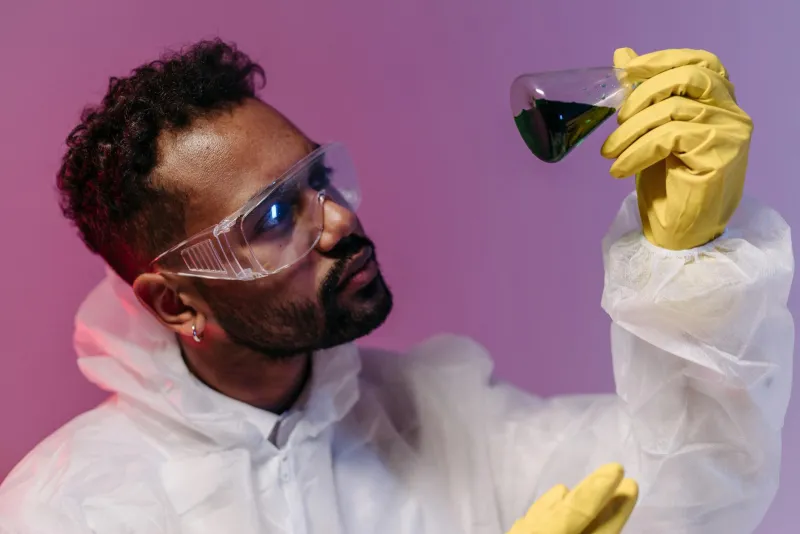
The Madman's Breakfast
On a July morning in 1984, Barry Marshall walked into his lab at Royal Perth Hospital, picked up a petri dish crawling with Helicobacter pylori bacteria, mixed it with beef broth, and drank it down like a protein shake. His colleagues thought he'd lost his mind. The medical establishment had already written him off as a crackpot. But Marshall knew something they didn't: sometimes the only way to prove you're right is to put your life on the line.
What happened next would overturn a century of medical dogma and save millions of lives. But first, Marshall had to survive his own experiment.
The Heretic and His Partner
Barry Marshall wasn't supposed to revolutionize medicine. At 32, he was just another resident physician in Perth, Australia — about as far from the centers of medical power as you could get. His partner, Robin Warren, was a pathologist who'd been quietly noticing something odd in stomach biopsies: spiral-shaped bacteria living where no bacteria should survive.
The conventional wisdom was ironclad. Stomach ulcers were caused by stress, spicy food, and too much acid. The cure? Bland diets, antacids, and sometimes surgery. The pharmaceutical industry had built a billion-dollar business around managing chronic ulcer disease. The idea that a simple bacterial infection could be the culprit was not just wrong — it was heretical.
Warren had been documenting these bacteria for years, but nobody listened to a pathologist from Perth. When he teamed up with Marshall, they began connecting the dots. Patients with ulcers almost always had these bacteria. Patients without ulcers rarely did. The correlation was undeniable, but correlation isn't causation.
Rejection After Rejection
Marshall and Warren tried everything. They submitted papers to prestigious journals. Rejected. They presented at conferences. Laughed out of the room. The medical establishment had a century of evidence that ulcers were caused by lifestyle factors, not infections. Who were these two unknowns from Australia to challenge that?
The rejections stung, but they also revealed something deeper. The gastroenterology community had too much invested in the status quo. Specialists made careers treating chronic ulcer disease. Pharmaceutical companies made fortunes selling acid-blocking drugs. A simple bacterial theory threatened an entire ecosystem.
"I was getting very frustrated," Marshall later recalled. "We had this great idea, and we couldn't get anyone to listen."
The Ultimate Experiment
By 1984, Marshall was desperate. Animal studies weren't working because most animals don't get human-type ulcers. Clinical trials would take years to approve. But Marshall had one test subject readily available: himself.
The plan was elegantly simple and completely insane. Marshall would drink a culture of H. pylori bacteria, develop gastritis (stomach inflammation), then cure himself with antibiotics. If it worked, he'd have proof that bacteria caused stomach problems. If it didn't work... well, he might die.
His wife thought he was crazy. His colleagues begged him to reconsider. But Marshall had reached the point where every great innovator eventually arrives: the moment when you realize that conventional wisdom isn't wisdom at all — it's just convention.
Five Days in Hell
Marshall's bacterial cocktail worked faster than expected. Within days, he was nauseated, vomiting, and suffering from severe stomach pain. His breath smelled like a garbage dump. Endoscopy revealed massive inflammation — exactly what the theory predicted.
On day five, Marshall started taking antibiotics. Within two weeks, his symptoms disappeared. Follow-up biopsies showed the bacteria were gone, and his stomach had healed completely.
He'd done it. He'd proven that at least some stomach problems were caused by bacterial infection, not stress or lifestyle. But the medical world still wasn't listening.
The Long Road to Recognition
Marshall's self-experiment made headlines, but changing medical practice takes more than one dramatic gesture. For the next decade, he and Warren continued fighting an uphill battle against entrenched interests and skeptical colleagues.
Gradually, though, the evidence became overwhelming. Other researchers began replicating their work. Clinical trials confirmed that antibiotic treatment could cure ulcers permanently, not just manage symptoms. The World Health Organization recognized H. pylori as a carcinogen that could cause stomach cancer.
By the late 1990s, the medical consensus had shifted completely. What had once been heresy became standard practice. A disease that had plagued humanity for millennia could now be cured with a simple course of antibiotics.
The Nobel Vindication
In 2005, Marshall and Warren received the ultimate vindication: the Nobel Prize in Physiology or Medicine. The committee praised them for their "tenacity and a prepared mind to challenge prevailing dogmas."
Marshall's acceptance speech was characteristically humble, but he couldn't resist a small dig at his former critics: "The idea that peptic ulcer disease had a microbial cause was ridiculed initially, but the idea gradually gained acceptance."
Gradually. After twenty years of fighting.
The Lesson of the Lonely Truth
Barry Marshall's story isn't just about medical discovery — it's about the courage to stand alone when you know you're right. In a room full of experts, the loneliest position is often the one closest to the truth.
Today, H. pylori treatment has prevented millions of ulcers and thousands of stomach cancers. A simple antibiotic course has replaced a lifetime of chronic disease management. All because one young doctor was willing to drink poison to prove his point.
Sometimes being right isn't enough. Sometimes you have to be willing to bet your life on it.