Hollywood Tried to Erase Him. He Won Two Oscars Anyway.
Hollywood Tried to Erase Him. He Won Two Oscars Anyway.
Picture this: you're one of the best in your field. You're well-paid, well-regarded, at the absolute top of your game. Then, almost overnight, your government labels you a subversive, your industry blacklists you, your friends won't return your calls, and you spend eleven months in a federal prison.
Most people would stop. Most people would find something else to do.
Dalton Trumbo just kept writing.
The Man Before the Blacklist
By the mid-1940s, Dalton Trumbo was one of Hollywood's most sought-after screenwriters. He'd adapted Kitty Foyle for Ginger Rogers, written Thirty Seconds Over Tokyo, and commanded fees that put him in the top tier of earners in the entire film industry. He was sharp, prolific, and politically outspoken — a combination that worked fine during World War II, when the U.S. government was actually encouraging Hollywood to make pro-Soviet films as part of the Allied effort.
Then the war ended, the alliance with the Soviets curdled into the Cold War, and suddenly Trumbo's politics made him a target.
In 1947, the House Un-American Activities Committee came calling. Trumbo, along with nine other Hollywood writers and directors who would become known as the Hollywood Ten, refused to cooperate — invoking their First Amendment rights rather than naming names or denouncing their political beliefs. The studio heads, terrified of bad press and government pressure, wasted no time. Within weeks of the hearings, the major studios issued what became known as the Waldorf Statement: the Hollywood Ten were suspended without pay, and anyone who didn't "cooperate" with HUAC would find themselves unemployable.
Trumbo was blacklisted before the ink was dry.
Prison, Poverty, and a Typewriter
In 1950, after losing his appeals, Trumbo reported to the Federal Correctional Institution in Ashland, Kentucky. He served eleven months. When he got out, he had a family to support, bills stacking up, and an industry that had officially decided he didn't exist.
So he did the only thing he knew how to do: he wrote.
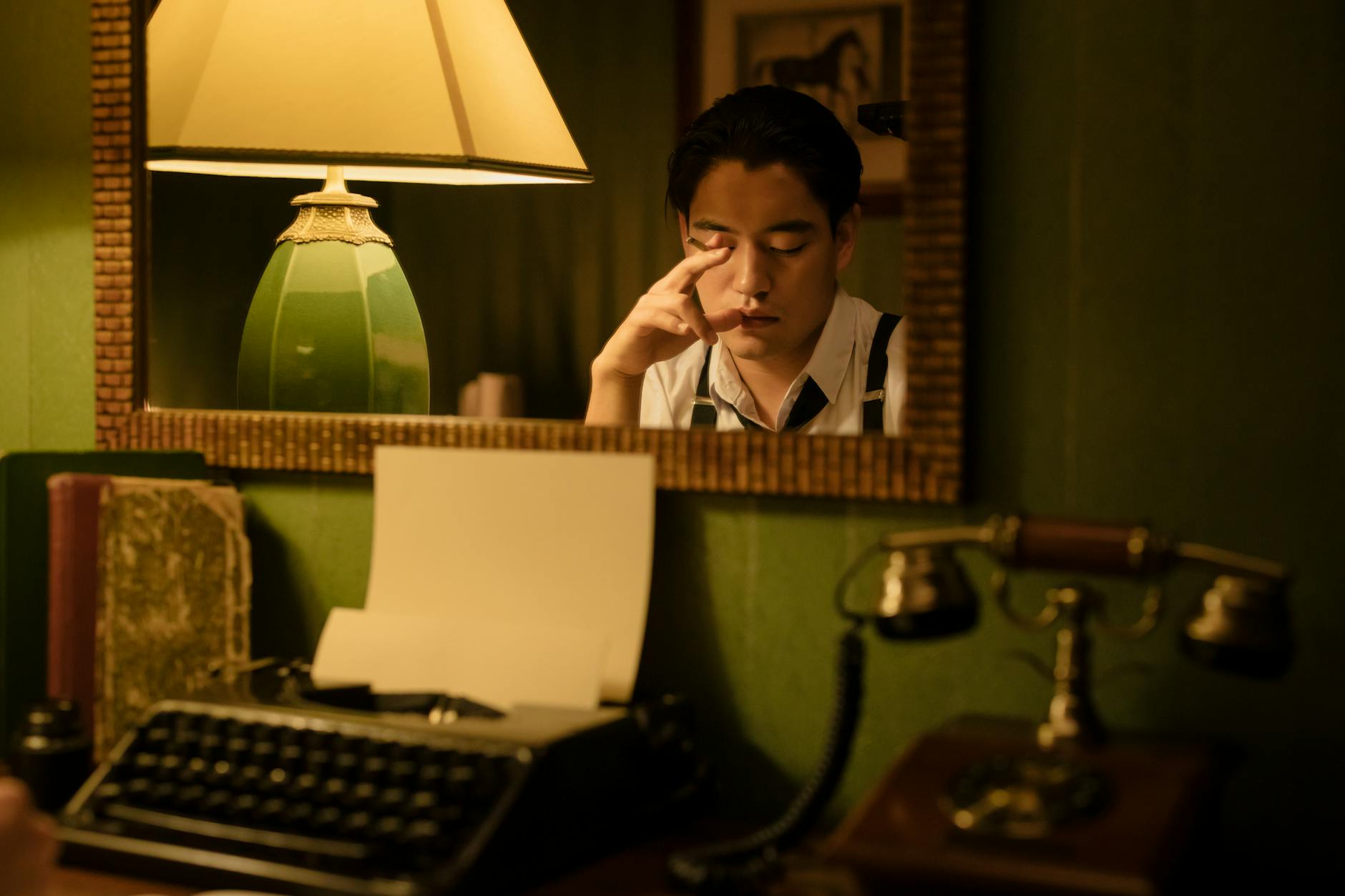
Trumbo became the engine of what was essentially a black-market screenplay operation. Working under a rotating roster of pseudonyms — and sometimes using the names of friends willing to act as fronts — he churned out scripts at a pace that would have been impressive even without the added pressure of hiding who he was. He worked in the bathtub, famously, balancing a writing board across the rim and writing for hours at a stretch. He wrote fast, he wrote cheap, and he wrote well.
The studios that had blacklisted him were, in some cases, unknowingly buying his work. The system designed to silence him was literally paying him to keep creating.
The Oscars Nobody Could Officially Explain
In 1953, a film called Roman Holiday was released by Paramount Pictures. It starred Audrey Hepburn in her breakthrough role, was directed by William Wyler, and won the Academy Award for Best Writing, Story. The credited writer was Ian McLellan Hunter.
Ian McLellan Hunter was a friend of Trumbo's who had agreed to front the script. The actual author was Dalton Trumbo, sitting at home under the blacklist, uncredited and unpaid by Hollywood's official accounting.
Three years later, a low-budget film called The Brave One won the Oscar for Best Writing, Motion Picture Story. The credited writer was Robert Rich. Nobody at the ceremony knew who Robert Rich was. When his name was called, nobody walked to the podium. The Academy had just given its highest writing honor to a ghost.
Robert Rich was Dalton Trumbo.
The industry spent years in collective denial about both awards. It wasn't until 1975 that the Academy formally acknowledged Trumbo as the author of Roman Holiday, and the Brave One situation remained tangled for decades. The Oscars existed. The winner didn't — not officially, not in any way the industry was willing to admit.
The Crack in the Wall
The blacklist didn't collapse all at once. It eroded, slowly, through a combination of legal pressure, shifting public opinion, and a few acts of deliberate defiance.
The most famous of those acts came in 1960, when director Otto Preminger publicly announced that Dalton Trumbo had written the screenplay for Exodus. Shortly after, Kirk Douglas — who had been using Trumbo's work on Spartacus under a pseudonym — made the same announcement. President-elect John F. Kennedy crossed an American Legion picket line to see Spartacus. The message was clear: the blacklist was over.
Trumbo's name appeared on screen for the first time in over a decade. He was 55 years old.
What Defiance Actually Looks Like
There's a version of this story that gets told as a straightforward civil liberties triumph, and it is that — but it's also something more personal and more interesting. Trumbo didn't survive the blacklist by becoming a symbol or a martyr. He survived it by refusing to stop working.
He was angry, no question. His letters from the period — many collected in a volume published after his death — are searingly funny and furious in equal measure. He knew exactly what was being done to him and he named it clearly. But the anger never curdled into paralysis. Instead, it fueled an almost superhuman level of output.
In the years he was blacklisted, Trumbo wrote somewhere between 30 and 40 screenplays. Thirty to forty. While hiding his identity, while managing financial stress, while living under a political cloud that could have landed him back in prison. The work was the resistance.
That's the part of Trumbo's story that tends to get lost in the broader narrative about McCarthyism and civil liberties. Yes, he was a victim of a genuinely unjust system. But he was also a writer who simply refused to let that system stop him from writing. He found the cracks, slipped through them, and kept going.
The industry that tried to erase him ended up preserving his work in its own trophy case — twice — without even realizing it.
If that's not stoked by a setback, nothing is.