Born in the Storm: Seven American Companies That Turned Their Worst Moment Into Their Greatest Advantage
When Everyone Else Runs, Some People Build
Most entrepreneurs wait for the "right time" to start their business. Market conditions need to be perfect, funding needs to be available, and consumer confidence needs to be high. These seven founders threw that playbook out the window. They launched during recessions, wars, terrorist attacks, and economic meltdowns—and discovered that sometimes the worst possible moment is actually the best time to begin.
Their secret? While everyone else was paralyzed by uncertainty, they saw opportunity hiding in plain sight.
1. Mars Inc. - Sweet Success During Bitter Times (1930)
Frank Mars didn't choose to start his candy company during the Great Depression—the timing chose him. After his first candy business failed spectacularly in 1920, he spent the next decade working odd jobs and perfecting recipes in his kitchen. By 1930, when unemployment hit 25% and most people were counting pennies, Mars was ready with something revolutionary: the Snickers bar.
While other businesses were cutting costs and laying off workers, Mars understood something counterintuitive about human nature. When people are stressed and money is tight, they still crave small luxuries—especially ones that cost a nickel and provide genuine comfort.
Mars positioned his candy bars not as indulgences but as affordable meals. "Snickers really satisfies," became more than a slogan—it was a promise to Depression-era Americans that for five cents, they could feel full and happy, if only for a moment.
The strategy worked. While countless businesses folded during the 1930s, Mars grew into one of America's largest private companies, still family-owned and worth over $40 billion today.
2. Hewlett-Packard - Garage Genius During Global War (1939)
Bill Hewlett and Dave Packard started their electronics company in a Palo Alto garage just as World War II was reshaping the global economy. Most investors were fleeing technology stocks, convinced that a world at war had no use for innovative electronics.
 Photo: Palo Alto, via www.cardcow.com
They were spectacularly wrong.
HP's first major breakthrough came from an unexpected source: Walt Disney. The animation studio needed affordable audio oscillators for Fantasia, and HP's garage-built device was both cheaper and better than anything established companies offered. This single order gave HP the credibility and cash flow to survive its early years.
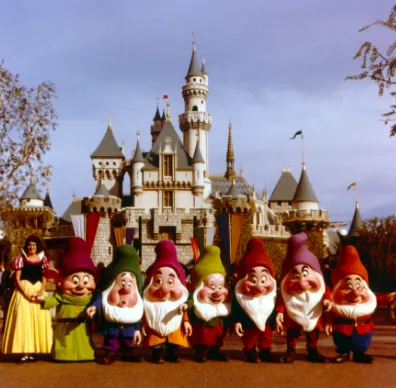 Photo: Walt Disney, via www.waltdisney.org
But the real opportunity came from the war itself. As the U.S. military desperately needed advanced electronics for radar and communications, HP found itself perfectly positioned as a nimble alternative to slower, more bureaucratic defense contractors.
By war's end, HP had grown from a garage startup to a major defense supplier. The company that started during humanity's darkest hour became the foundation of Silicon Valley itself.
3. Trader Joe's - Convenience Store Revolution During Social Upheaval (1967)
Joe Coulombe opened his first Trader Joe's store in 1967, right in the middle of America's most turbulent decade. Cities were burning, the Vietnam War was tearing the country apart, and traditional retail was struggling to understand rapidly changing consumer preferences.
Coulombe saw opportunity in the chaos. The same social upheaval that was disrupting traditional businesses was creating a new type of consumer: college-educated, well-traveled, and eager for unique products that reflected their sophisticated tastes.
While other grocers were trying to be everything to everyone, Coulombe deliberately went narrow and deep. He stocked unusual wines, international foods, and gourmet products at affordable prices, creating a treasure hunt shopping experience that turned grocery shopping from a chore into an adventure.
The timing was perfect. As the counterculture movement embraced everything foreign and exotic, Trader Joe's became the place where you could find French cheese, California wine, and organic produce long before these items appeared in mainstream supermarkets.
Today, Trader Joe's operates over 500 stores and maintains a cult-like following among customers who see shopping there as a lifestyle choice, not just a necessity.
4. FedEx - Overnight Success During Oil Crisis (1973)
Fred Smith launched Federal Express in 1973, just as the Arab oil embargo was sending fuel prices through the roof and triggering a global recession. Starting an airline-based delivery service when jet fuel was becoming prohibitively expensive seemed like financial suicide.
Smith bet everything on a simple insight: in an increasingly complex economy, speed matters more than cost. While the oil crisis was making traditional shipping more expensive and unreliable, businesses desperately needed a way to move critical documents and packages quickly and predictably.
FedEx's hub-and-spoke system, centered in Memphis, was designed for efficiency during a time when efficiency had become a matter of survival. The company's purple planes became symbols of reliability in an unreliable world.
The oil crisis that should have killed FedEx actually validated its entire business model. Companies learned they couldn't afford to wait for slow, uncertain delivery when their operations depended on just-in-time logistics.
FedEx went public in 1978 and revolutionized global commerce. The company that launched during an energy crisis became the backbone of the modern supply chain.
5. CNN - 24-Hour News During Recession (1980)
Ted Turner launched CNN in June 1980, during a recession that had advertising revenues plummeting and established networks cutting costs. Starting a 24-hour news channel when the "Big Three" networks were struggling to fill their existing time slots seemed delusional.
Turner understood that the world was becoming too complex and fast-moving for once-a-day news broadcasts. While ABC, CBS, and NBC were still operating on a schedule designed for the 1950s, global events were happening around the clock and demanding immediate coverage.
CNN's breakthrough moment came in 1981 with the attempted assassination of President Reagan. While the traditional networks scrambled to interrupt regular programming, CNN was already there, providing continuous coverage that demonstrated the value of always-on news.
The Gulf War in 1991 cemented CNN's reputation as the go-to source for breaking news. The network that launched during a recession became the most trusted name in news and spawned an entire industry of 24-hour cable channels.
6. Airbnb - Home Sharing During Housing Crisis (2008)
Brian Chesky and Joe Gebbia launched Airbnb in 2008, just as the subprime mortgage crisis was destroying the housing market and triggering the worst recession since the 1930s. Starting a company based on strangers staying in each other's homes when trust in financial institutions was at an all-time low seemed tone-deaf at best.
But the housing crisis created exactly the conditions Airbnb needed to succeed. Millions of homeowners were suddenly underwater on their mortgages and desperately needed additional income. At the same time, travelers were looking for cheaper alternatives to expensive hotels.
The recession forced both hosts and guests to overcome their natural reluctance to trust strangers. When money is tight, people become more willing to take calculated risks for financial benefit.
Airbnb's breakthrough came during the 2008 Democratic National Convention in Denver, when hotels were booked solid and the founders convinced locals to rent out air mattresses in their apartments. What started as a desperate attempt to pay rent became proof that the sharing economy could work.
Today, Airbnb is worth over $70 billion and has fundamentally changed how people think about travel and property ownership.
7. Zoom - Video Calls During Skepticism (2011)
Eric Yuan founded Zoom in 2011, during a time when video conferencing was synonymous with frustration. Skype was unreliable, corporate solutions were expensive and complicated, and most people still preferred phone calls for important meetings.
Yuan, a former Cisco executive, saw that existing video conferencing tools were designed by engineers for engineers, not for regular people who just wanted to talk face-to-face without technical headaches.
While established players were focused on enterprise features and premium pricing, Zoom obsessed over simplicity and reliability. The company's "it just works" philosophy seemed almost quaint in a tech industry that celebrated complexity.
The COVID-19 pandemic vindicated Yuan's decade-long bet. When the world suddenly needed reliable video conferencing, Zoom was ready. The company that nobody took seriously became essential infrastructure for remote work, education, and social connection.
Zoom's stock price increased over 400% in 2020, and the company's name became a verb synonymous with video calling.
The Crisis Advantage
These seven companies succeeded not despite the chaos surrounding their launches, but because of it. Crisis creates three powerful advantages for bold entrepreneurs:
Reduced Competition: When times are tough, most potential competitors are focused on survival rather than innovation, leaving more room for newcomers to establish themselves.
Motivated Customers: During difficult periods, people are more willing to try new solutions to pressing problems, especially if those solutions offer clear value.
Lower Costs: Economic downturns often mean cheaper rent, more available talent, and reduced marketing costs as competitors pull back their spending.
Most importantly, companies born during crises develop a resilience and focus that serves them well long after the immediate danger has passed. They learn to operate efficiently, prioritize ruthlessly, and never take success for granted.
The next time the world seems to be falling apart, remember these seven companies. Sometimes the best time to build something new isn't when everything is perfect—it's when everything is broken and someone needs to fix it.